The “AI Summer” of 2023 was about talking to machines. The “AI Revolution” of 2026 is about machines that do. We have moved past simple chatbots into the era of Agentic AI—systems capable of reasoning, planning, and executing complex tasks with minimal human intervention.
If you feel like you’re falling behind the curve, you aren’t alone. The jump from prompting a GPT to building a multi-agent system can feel like moving from driving a car to managing a fleet of autonomous trucks. This guide provides a definitive agentic AI learning path for 2026, designed to take you from a curious observer to a proficient builder.
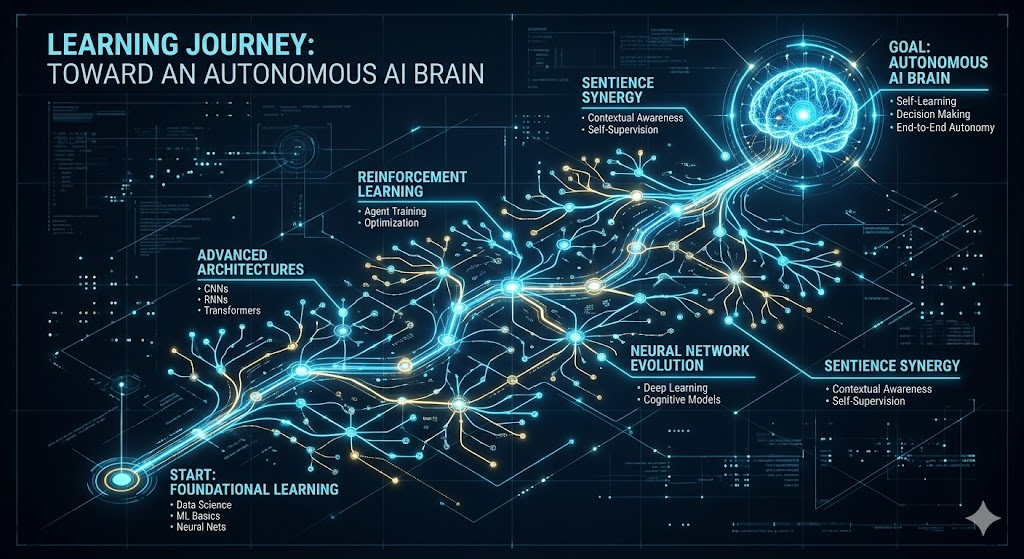
What Is Agentic AI — And Why Does It Matter in 2026?
Artificial intelligence is entering a fundamentally new phase.
For years, most people used AI like a chatbot: ask a question, get an answer. But the next wave is different — and far more powerful.
Agentic AI systems can now:
- plan tasks independently
- make decisions autonomously
- use external tools
- coordinate complex workflows
- complete entire projects end-to-end
For entrepreneurs, freelancers, and builders, agentic AI may become one of the most valuable skills of the decade.
This guide walks you through the complete Agentic AI Learning Path for 2026 — from beginner fundamentals to advanced multi-agent architectures.
What Is Agentic AI? (Definition)
Agentic AI refers to AI systems that act autonomously to achieve defined goals.
Rather than responding to a single prompt, an AI agent can:
- analyze a goal
- break it into actionable tasks
- choose the right tools
- execute each step
- evaluate and refine results
In short: AI becomes a digital worker.
AI Agent Architecture Explained: Goal, Reasoning, Memory, Tools, and Actions
An Artificial Intelligence (AI) agent is an autonomous entity that perceives its environment and takes actions to achieve specific goals. This architecture can be broken down into five key components: Goal, Reasoning, Memory, Tools, and Actions. Together, these components enable an AI agent to operate effectively and adapt to changing circumstances.
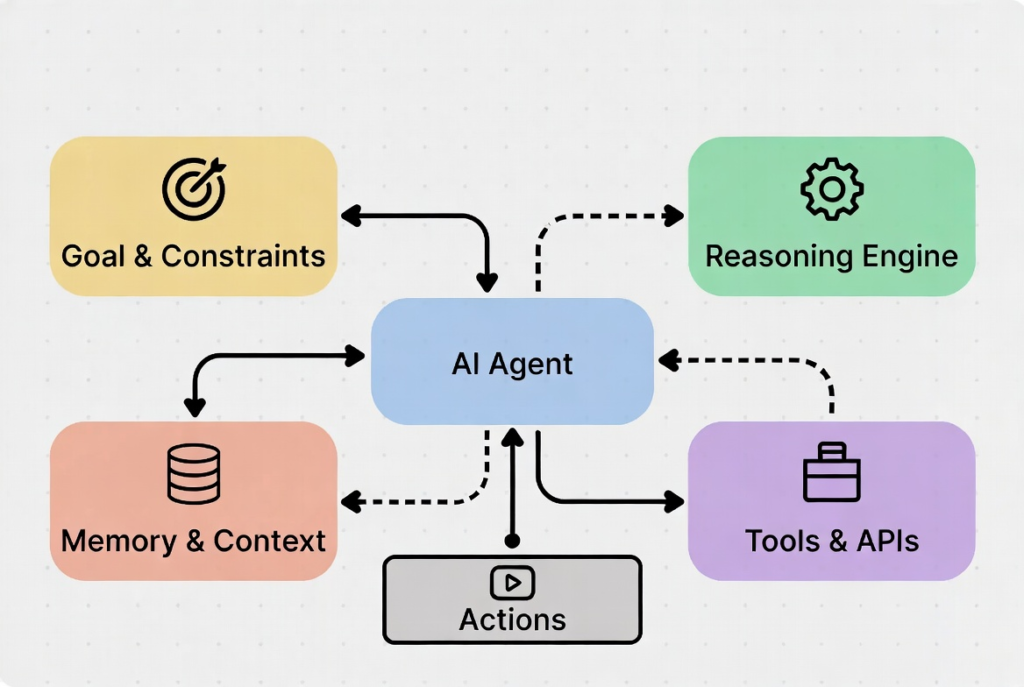
- Goal: The AI agent’s goal is the desired outcome or objective it is designed to achieve. Goals can be simple (e.g., “turn on the light”) or complex (e.g., “optimize a logistics network”). The goal guides the agent’s reasoning process and dictates which actions it should take. In a broad sense, the goal represents the “why” behind the agent’s behavior.
- Reasoning: Reasoning is the AI agent’s ability to process information, make decisions, and plan its actions to achieve its goal. This involves using various algorithms and techniques, such as logic, probability, optimization, and search. The reasoning component analyzes the current situation, considers potential actions, and selects the best path forward based on its knowledge and goal. Essentially, it is the “how” the agent figures out what to do.
- Memory: The AI agent’s memory stores and retrieves information relevant to its goals and operations. Memory can be categorized into short-term (active) and long-term (passive) stores. Short-term memory keeps track of immediate information related to current tasks, while long-term memory stores past experiences, learned knowledge, and general information about the environment. This memory allows the agent to learn from experience, recall previous actions, and build a cohesive understanding of its world. In short, it is the agent’s knowledge repository.
- Tools: Tools are the interface between the AI agent and the outside world, enabling it to collect information and perform actions. Tools can include sensors to perceive the environment, actuators to physically interact with the environment (if applicable), software APIs to access online resources, and other algorithms to perform specific tasks. Examples of tools include temperature sensors, robotic arms, web scrapers, and natural language processing units. The agent uses tools to get information (inputs) and carry out its decisions (outputs).
- Actions: Actions are the specific steps taken by the AI agent to interact with its environment and make progress towards its goal. These can be physical (e.g., moving an arm, sending a signal) or digital (e.g., modifying a database, sending an email). The reasoning component determines the most appropriate actions to take based on the current situation and the agent’s goals and capabilities. In essence, it is the agent’s direct impact on the environment.
The components of an AI agent’s architecture work together in a cyclical and interactive manner. The agent perceives its environment using its tools, processes this information with its reasoning, and makes a decision based on its goals and knowledge. This decision is translated into a series of actions that are then performed in the environment. The effects of these actions are subsequently perceived by the agent, updating its memory and informing future reasoning processes.
This architecture is not rigid, and the specific implementation of each component can vary significantly depending on the agent’s type, purpose, and sophistication. However, understanding these five core components provides a solid foundation for designing, building, and analyzing AI agents. As AI technology continues to advance, we can expect to see more intelligent, autonomous, and adaptive agents that play increasing roles in our lives and society.
Real-World Example: What an AI Agent Actually Does
Imagine giving this instruction:
“Research the best AI tools for startups and write a blog article about them.”
A traditional AI model simply generates text.
An agentic AI system, however, would:
- search the web for current information
- collect and evaluate sources
- summarize key findings
- draft the article
- generate matching images
- publish the content
— all autonomously, without additional input.
Why Agentic AI Is Exploding in 2026
Several technological breakthroughs have made agentic AI possible at scale.
1. Powerful Large Language Models (LLMs)
Modern LLMs can reason through complex, multi-step tasks. The leading providers include:
- OpenAI (ChatGPT)
- Anthropic (Claude)
- Google DeepMind (Gemini)
These models serve as the “brain” of any AI agent.
2. Tool Use — AI That Interacts With External Systems
AI models can now call external tools in real time:
- APIs and web search
- databases and code execution
- file systems and communication platforms
This dramatically expands what AI systems can actually do.
3. Retrieval-Augmented Generation (RAG)
RAG allows AI systems to access external knowledge on demand:
- search through documents
- query databases
- retrieve real-time information
Instead of relying only on training data, agents can work with live, current information.
4. AI Agent Frameworks
New frameworks make building agents significantly faster. The most widely used include:
- LangChain
- CrewAI
- AutoGen
- Semantic Kernel
The 5 Levels of the Agentic AI Learning Path
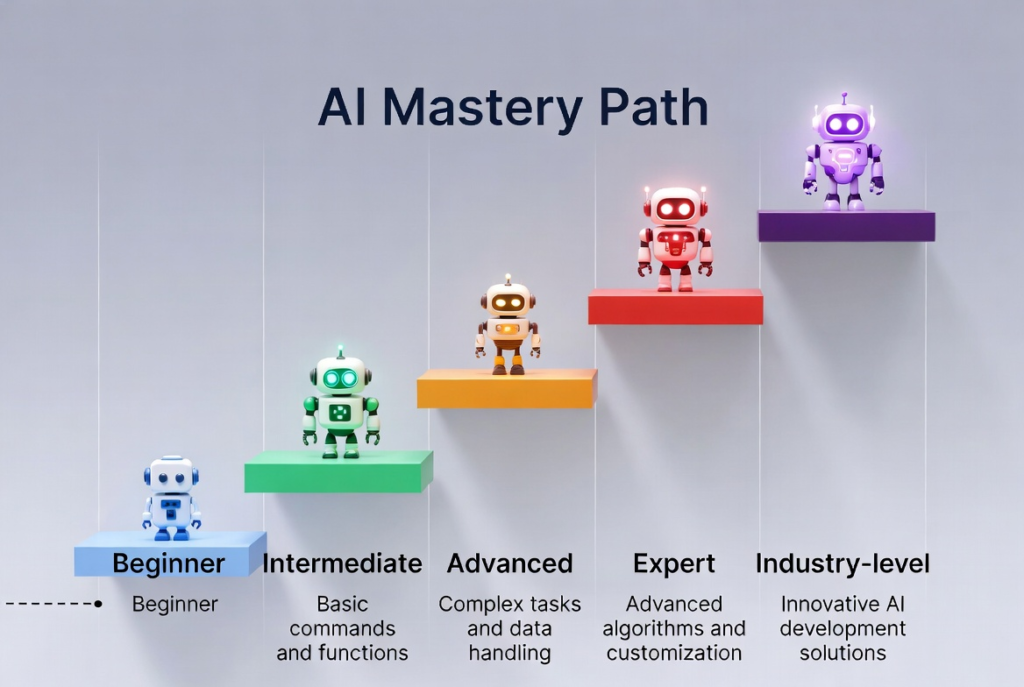
The most effective approach to learning agentic AI is a structured, step-by-step progression. Most professionals move through five distinct levels.
Level 1 — AI Literacy
What you learn:
- How AI models work
- Prompting fundamentals
- AI strengths and limitations
- How to use modern AI tools productively
Recommended tools to start with:
| Tool | Strength |
|---|---|
| ChatGPT | General-purpose, widely used |
| Claude | Strong reasoning, long context |
| Perplexity | AI-powered web search |
| Gemini | Deep Google ecosystem integration |
Goal: Use AI confidently and productively every day.
Level 2 — Prompt Engineering
Good prompting is the difference between mediocre and exceptional AI output.
Key techniques:
- Role prompting — assign a specific role to the AI
- System prompts — define behavior and tone
- Chain-of-thought — force step-by-step reasoning
- Structured prompts — shape output format precisely
Example prompt:
“You are an experienced startup advisor. Analyze this business idea and provide specific strengths, weaknesses, and actionable improvements.”
Goal: Turn AI from a novelty into a serious productivity tool.
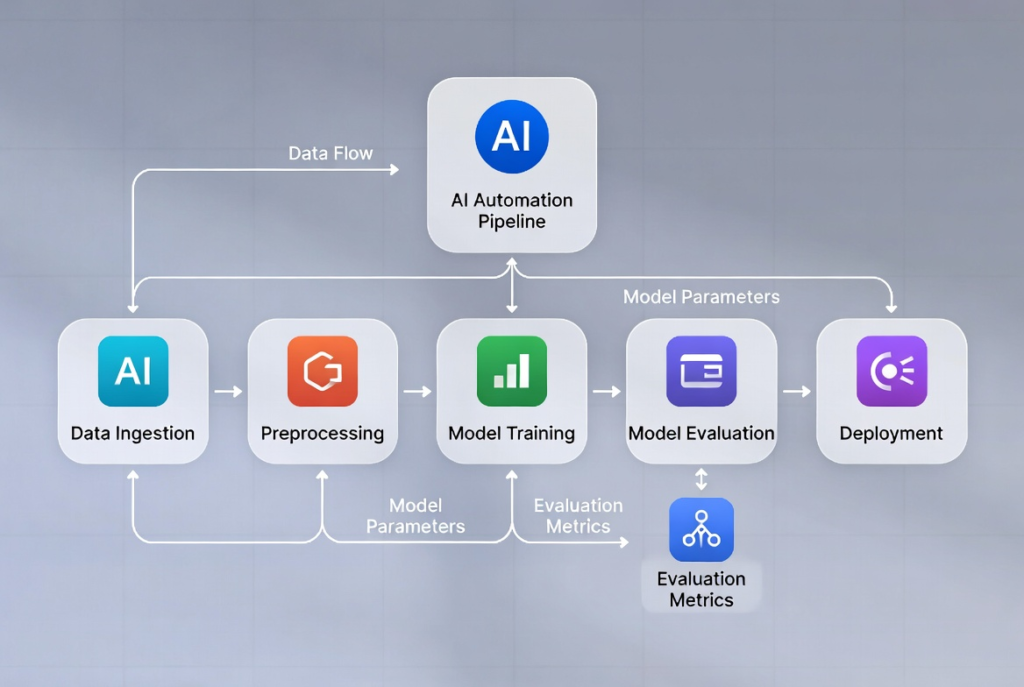
Level 3 — AI Automation
Here you begin building multi-step AI workflows.
Example workflow:
Collect information → Summarize → Generate content → Create images → PublishPopular automation tools:
- Make.com — visual no-code workflow builder
- Zapier — simplest integrations for beginners
- n8n — open-source, highly flexible
Many freelancers start offering AI automation services at this stage.
Level 4 — AI Agents
Now you build fully functional AI agents.
What an AI agent can do:
- plan tasks independently
- reason through complex problems
- call tools and trigger actions
- adapt workflows dynamically
Example agents:
- Research Agent — automated market research
- Content Agent — fully autonomous content creation
- Coding Assistant — generate, test, and debug code
- Customer Support Agent — automatically handle tickets
Frameworks:
| Framework | Key Strength |
|---|---|
| LangChain | Largest ecosystem, highly flexible |
| CrewAI | Multi-agent coordination out of the box |
| AutoGen | Microsoft-backed, excellent for coding tasks |
Goal: You are no longer just using AI — you are building systems powered by AI.
Level 5 — Multi-Agent Systems
The most advanced stage: multiple specialized agents collaborating together.
Example architecture:
Research Agent → Writer Agent → Editor Agent → Publisher AgentEach agent has a clearly defined role. Together, they complete tasks that would overwhelm any single agent.
Use cases:
- AI startups and automation platforms
- Enterprise workflow automation
- Autonomous content production at scale

Skills Required for Agentic AI
Technical Skills
| Skill | Why It Matters |
|---|---|
| Python | Standard language for AI development |
| API integrations | Connect tools and external services |
| Vector databases | Foundation of RAG systems |
| LLM APIs | Use OpenAI, Anthropic, Google directly |
AI Concepts to Understand
- Embeddings — how AI understands meaning
- RAG architecture — connecting agents to external knowledge
- Prompt engineering — controlling AI output precisely
- Agent orchestration — coordinating multiple agents
Business Thinking
The most important mindset shift for entrepreneurs:
“Which of my recurring tasks could an AI agent handle automatically?”
Asking this question consistently unlocks enormous business opportunities.
Essential Tools in the Agentic AI Ecosystem
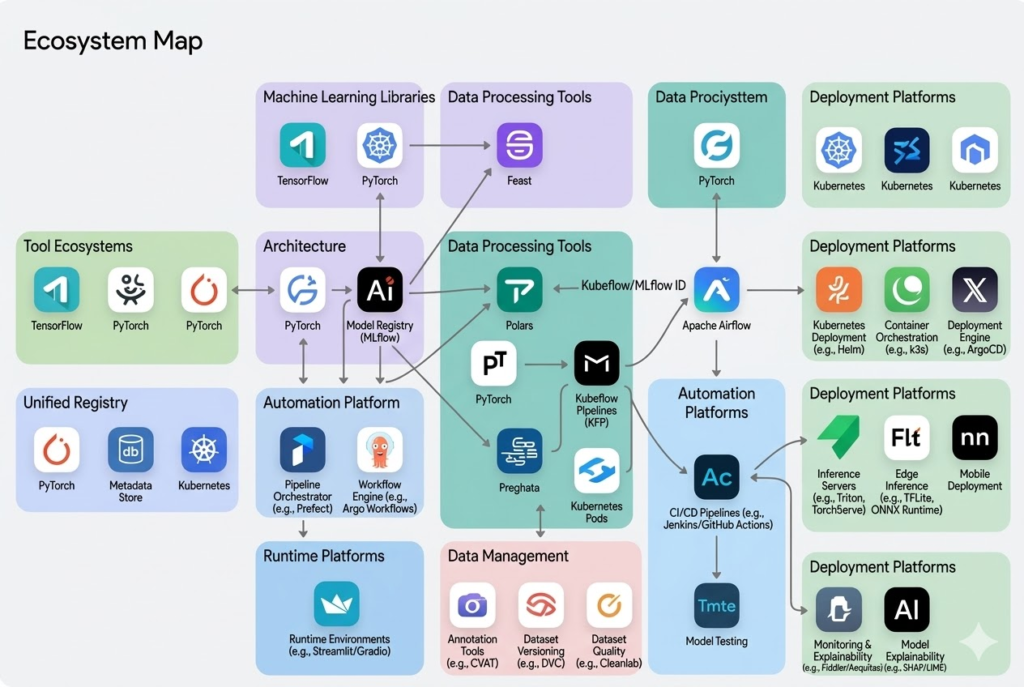
A List of AI Tools is provided in the AI Tool Finder
LLM Platforms (the “brain”)
- OpenAI ChatGPT
- Anthropic Claude
- Google Gemini
- Mistral (open-source option)
Agent Frameworks (the “infrastructure”)
- LangChain
- CrewAI
- AutoGen
- OpenAI Assistants API
Automation Platforms (for non-developers)
- Make.com
- Zapier
- n8n
Hands-On Projects: The Fastest Way to Learn Agentic AI
Beginner Projects
AI Research Assistant
- Input: any topic
- Output: structured research report
AI Content Generator
- Automatically produce blog posts, social media content, and newsletters
Intermediate Projects
AI Email Assistant
- Automatically classify incoming emails
- Summarize long message threads
- Draft context-aware replies
AI Lead Generation Agent
- Scan websites for prospects
- Extract contact data
- Enrich and qualify leads automatically
Advanced Projects
Multi-Agent Content Factory
Multiple agents collaborate to produce:
- Articles and blog posts
- Images and graphics
- Videos and social content
Autonomous Research Agent
The system researches markets and delivers fully automated reports without human input.

How Entrepreneurs Can Profit From Agentic AI
Agentic AI is not just for developers. Entrepreneurs are building entire businesses around these systems.
| Business Model | Description |
|---|---|
| AI Automation Agency | Build custom automation solutions for clients |
| AI Content Factory | Scalable content production as a service |
| AI Marketing Assistant | Campaign automation as SaaS or consulting |
| AI Research Service | Deliver automated market analysis reports |
High-demand freelance services:
- Workflow automation design
- AI consulting and strategy
- Agent system architecture
The Future of Agentic AI

Over the next several years, we will see:
- AI-driven workflows across nearly every industry
- Autonomous digital teams supporting entire departments
- AI-managed processes in companies of all sizes
The biggest opportunity will go to those who learn to design and control AI systems — not just use them.
The earlier you start, the larger your advantage.
FAQ — Agentic AI Learning Path
What is agentic AI?
Agentic AI refers to artificial intelligence systems that autonomously plan and execute tasks to achieve defined goals — without requiring human input at every step.
Do I need coding skills to build AI agents?
Not necessarily. No-code tools like Make.com and n8n provide accessible entry points. However, Python knowledge becomes a significant advantage for building advanced systems.
What is the best programming language for AI agents?
Python is the most widely used language for AI agent development. It has the largest ecosystem of AI frameworks and libraries.
How long does it take to learn agentic AI?
Most people can build their first automation workflows within a few weeks. Advanced agent development typically requires several months of consistent practice.
What frameworks are used to build AI agents?
The most popular are LangChain, CrewAI, and AutoGen. CrewAI is often the best starting point for beginners due to its intuitive multi-agent design.
Is agentic AI only for large companies?
No. Freelancers and solo entrepreneurs are already building profitable businesses using agentic AI. The barrier to entry is lower than ever in 2026.
Conclusion: Start Building Today
Agentic AI represents the next major wave of artificial intelligence.
AI is no longer a passive tool — it plans, acts, reasons, and delivers results.
For entrepreneurs and freelancers, this shift creates enormous new opportunities.
The path forward is straightforward:
- Start today with the fundamentals
- Build small projects — even simple ones count
- Experiment with available tools and frameworks
- Create your first agents and iterate from there
The future belongs to those who design intelligent systems — not just those who use them.