AI Agents Tools for Content Creation
⏱ 20 min read · Category: AI Tools
Content teams are under pressure like never before. Brands need more content, published faster, across more channels — and audiences expect quality that feels human. In 2026, the answer isn’t hiring more writers. It’s deploying AI agents that research, draft, optimise, and schedule content autonomously while you focus on strategy and brand voice.
This guide covers the best AI agent tools for content creation in 2026: what they do, how they compare, who they’re best for, and how to build a real content workflow around them. According to Gartner, 40% of enterprise applications will include task-specific AI agents by end of 2026 — up from under 5% in 2025.
Table of Contents
- What Are AI Agents for Content Creation?
- Why AI Agents in 2026 Are Different
- Category 1: Long-Form Writing Agents
- Category 2: Social Media & Short-Form Agents
- Category 3: Visual Content Agents
- Category 4: End-to-End Content Pipeline Agents
- Comparison Table: Best AI Content Agents at a Glance
- How to Build Your AI Content Workflow
- Real-World Patterns That Work
- FAQ
What Are AI Agents for Content Creation?
An AI agent is more than a chatbot that writes on demand. It’s a system that can plan, execute, and complete multi-step content tasks with minimal human input.
Where a standard AI writing tool needs a prompt for every output, an AI agent can receive a goal — “produce five SEO blog posts on AI automation this month” — and handle the research, outlining, drafting, image sourcing, SEO optimisation, and scheduling autonomously.
The shift matters for content teams. Instead of using AI as a faster keyboard, you use it as an autonomous colleague that owns tasks from brief to publish. This distinction is increasingly important: single-step AI tools are being replaced by agent workflows that reduce human touchpoints at every stage.
What separates an AI agent from a standard writing tool comes down to three capabilities: tool use (the ability to call APIs, browse the web, or run searches), memory (maintaining context across sessions and learning from feedback), and planning (breaking a high-level goal into sub-tasks and executing them in sequence).
Key takeaway: AI agents handle the full content lifecycle — not just the drafting step.
Why AI Agents in 2026 Are Different
The 2026 content landscape has crossed a threshold. IDC projects AI copilots will be embedded in nearly 80% of enterprise workplace apps by end of 2026. The productivity numbers are striking: human–AI collaborative content teams show 60% greater productivity than human-only teams, spending 23% more time on creative strategy and 60% less on editing.
Marketing teams using agents for campaign development achieve 73% faster timelines and 68% shorter content creation cycles. Employees report average productivity boosts of 40%, and marketers save 3 hours per piece of content.
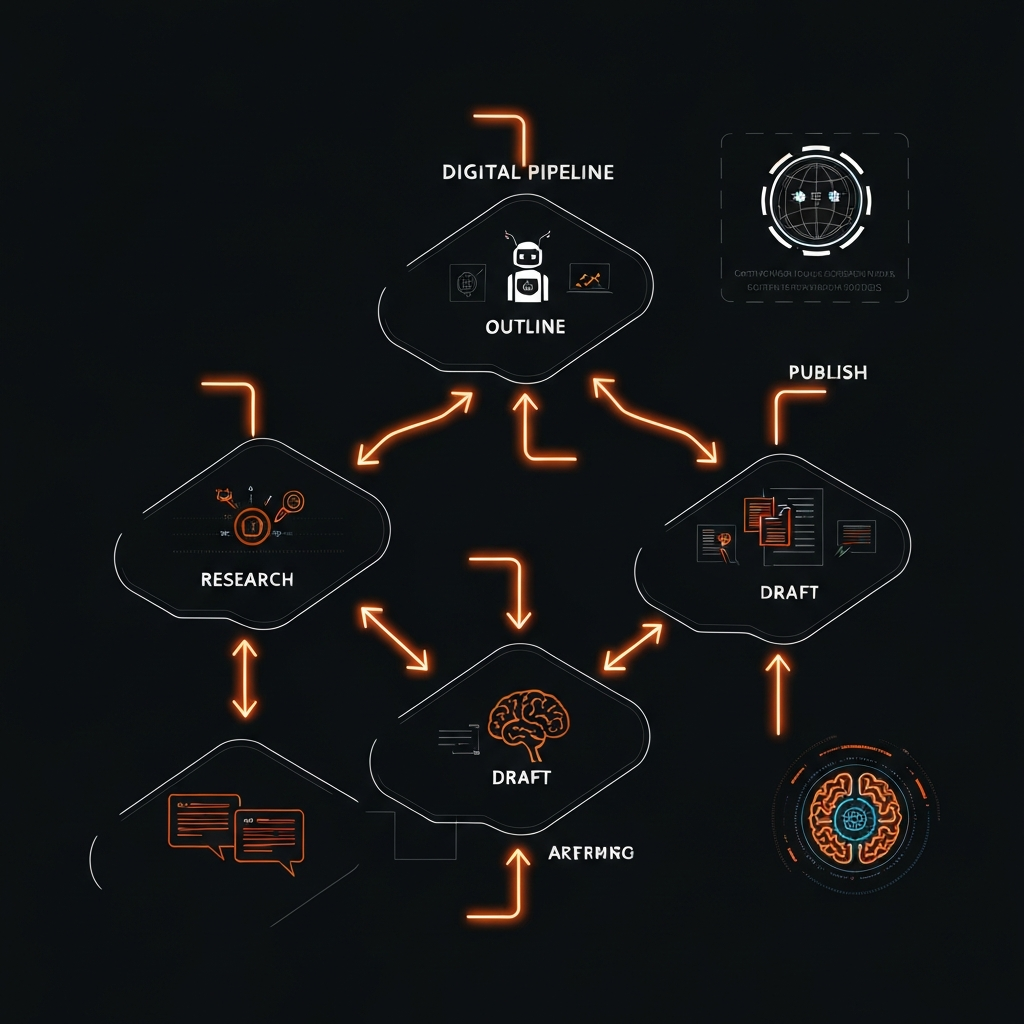
Three forces make 2026 different from prior years:
Agentic Chaining
Modern AI agents chain tasks seamlessly. Research → outline → draft → SEO check → publish is now a single automated workflow, not five manual steps with different tools. Frameworks like LangGraph and CrewAI let developers wire these chains together with conditional branching, meaning the agent can loop back, self-correct, and try different approaches when quality thresholds aren’t met.
Persistent Memory and Brand Voice
2026 agents maintain memory across sessions. They learn your brand tone, preferred style, and target audience — and apply that knowledge consistently across every piece of content. Tools like Jasper and Sona have built dedicated memory layers that store not just style preferences but facts about your product, audience personas, and messaging priorities.
Multi-Modal Output
Agents now handle text, images, social cards, and short video scripts in a single workflow. You describe the campaign; the agent produces all assets. This multi-modal capability dramatically reduces the time between “brief received” and “content ready to review.”
Key takeaway: 2026 AI agents are pipeline workers, not just writing assistants — they own tasks end-to-end.
Category 1: Long-Form Writing Agents
Long-form content — blog posts, whitepapers, guides — is where AI agents deliver the most immediate time savings.
Claude Opus 4.6 (Anthropic)
Claude Opus 4.6 is the best model for long-form, research-heavy content in 2026. Its 1M token context window means you can feed it your entire brand guidelines, competitor articles, and keyword brief in a single prompt and get a perfectly calibrated output.
It excels at nuanced writing that doesn’t sound like AI. The instruction-following is precise: tell it to write at a 9th-grade reading level with short paragraphs and a conversational tone, and it delivers consistently across a 5,000-word post. For SEO-focused teams, Claude pairs exceptionally well with Perplexity for research, feeding structured findings directly into a drafting prompt.
- Best for: Thought leadership, SEO blog posts, detailed guides
- Agentic use: Combine Claude with LangGraph or n8n to automate research → outline → draft → review loops
- Pricing: Claude Haiku 4.5 at $0.25/1M tokens for high-volume pipelines; Opus 4.6 for quality-critical work
ChatGPT (GPT-5 / GPT-5.3 Instant)
GPT-5 is OpenAI’s 2026 flagship — the most broadly capable writing model available. GPT-5.3 Instant is the everyday default: fast, cost-effective, and strong at SEO-optimised content. The GPT-5.3-Codex variant handles technical content — documentation, developer tutorials, API guides that mix prose and code.
One of GPT-5’s standout strengths for content teams is its native integration with tools like Google Docs, Notion, and Zapier through the ChatGPT Connectors feature, enabling true “write and publish” workflows without custom development.
- Best for: General content, technical writing, versatile output
- Agentic use: GPT-5 with function calling plugs natively into CMS platforms, Google Docs, and Notion
Jasper AI
Jasper is purpose-built for marketing teams. Its brand voice system is the standout feature — it learns your company’s tone from existing content and applies it consistently. In 2026, Jasper’s Creator plan starts at $39/month (billed annually) and includes 50+ templates, 30+ languages, and 50 knowledge assets. The Pro plan at $59/month adds multi-user support, 3 brand voices, and Surfer SEO integration.
Jasper’s “Campaign” feature lets you input a single brief and receive a full suite of matched assets: blog post, email sequence, LinkedIn posts, and ad copy — all in the same brand voice. This is particularly valuable for marketing teams running product launches or seasonal campaigns.
- Best for: Marketing teams needing brand consistency at scale
- Pricing: jasper.ai/pricing
Key takeaway: For pure long-form quality, Claude + a workflow tool beats Jasper. For brand consistency across a marketing team, Jasper’s guardrails are worth the premium.
Category 2: Social Media & Short-Form Agents
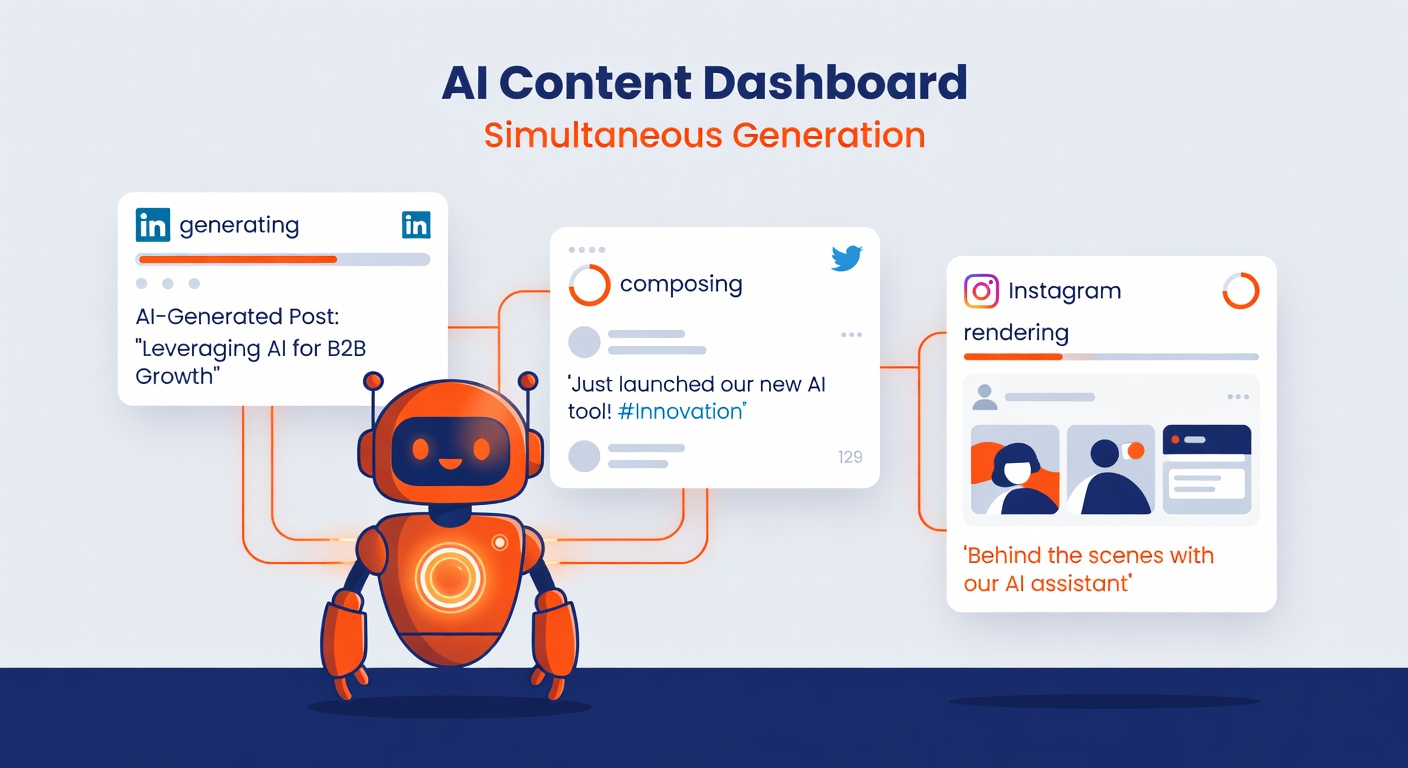
Short-form content — LinkedIn posts, Twitter threads, Instagram captions — is high volume and repetitive. These are ideal AI agent tasks.
Copy.ai
Copy.ai has evolved from a writing assistant into a GTM (Go-To-Market) workflow platform. Its agent workflows automate lead enrichment, personalised outreach, social post generation, and campaign briefs. Connect your CRM and let Copy.ai auto-generate personalised content for each segment. The Workflows feature is particularly powerful for enterprise teams: define a multi-step content process once and run it at scale with minimal intervention.
- Pricing: Free plan available; paid plans from $49/month
- Best for: Sales-driven content teams, startup marketers
Buffer AI Assistant
Buffer’s AI assistant lives inside the social scheduling platform. Generate post variations, repurpose long-form into social snippets, and schedule — without leaving Buffer. The AI can take a single blog post and produce seven platform-specific variations (LinkedIn, X/Twitter, Instagram, Facebook, Threads, Pinterest, TikTok captions) in a single click, each tuned to the platform’s preferred style and length.
- Pricing: Included in Buffer plans (free tier available)
- Best for: Solopreneurs and small teams managing organic social
Sona
Sona builds a verbal identity from short guided interviews and automatically turns a 10-minute conversation into weeks of LinkedIn posts, newsletter content, and blog drafts — written in your authentic voice. It’s particularly effective for thought leaders who have strong opinions but find writing time-consuming.
- Best for: Personal brand builders, consultants, founders
- Why it stands out: The output genuinely sounds like you, not generic AI output
Key takeaway: For volume social content, Buffer AI is the quickest win. For personal brand content that sounds human, Sona is worth testing.
Category 3: Visual Content Agents
Content in 2026 is multi-modal. Text alone rarely performs. The best AI agent stacks include a visual layer.
Canva AI (Magic Design + Text-to-Image)
Canva’s 2026 AI suite covers text-to-image generation, auto-layout suggestions, one-click video resizing, and the Magic Write tool for captions. Magic Design generates complete campaign asset sets — social cards, email headers, presentation slides — from a single text brief.
The Brand Kit integration is especially powerful for consistent content at scale: Canva AI pulls your brand colours, fonts, and logo automatically, ensuring every AI-generated asset is on-brand without a design review step.
- Pricing: Free plan available; Pro at ~$15/month
- Best for: Marketing teams without a dedicated designer
Descript
Descript is the leading tool for media repurposing. Upload a podcast episode or webinar recording and Descript’s AI:
- Transcribes automatically
- Removes filler words and silences
- Suggests short clips for social sharing
- Generates a blog post draft from the transcript
- Pricing: Free plan; Pro at $24/month — descript.com
- Best for: Podcasters, webinar hosts, video-first content teams

Key takeaway: Descript is one of the highest-ROI tools for any content team producing video or audio. One 30-minute recording becomes 10+ repurposed assets automatically.
Category 4: End-to-End Content Pipeline Agents
For teams needing full automation — from content brief to published draft — these platforms orchestrate the entire workflow.
NoimosAI
NoimosAI positions itself as a full marketing team replacement. Its agents handle market research, content strategy, briefing, drafting, SEO optimisation, and social scheduling in one automated pipeline. Early adopters report reclaiming 50+ hours per week by automating end-to-end marketing workflows.
- Best for: Growth-stage companies wanting lean content operations
n8n + Claude/GPT-5
For developers and technical content teams, building a custom pipeline in n8n connected to Claude or GPT-5 via API is the most flexible and cost-effective option.
A typical setup:
- n8n monitors an Airtable content calendar
- For each new brief, it calls Claude to generate an outline
- Claude drafts the full post
- n8n sends it to Notion for human review
- On approval, it auto-posts to WordPress
This approach is the backbone of fully autonomous content operations and is covered in detail in the AI Automation Guide on learnAI.
Key takeaway: n8n + Claude = maximum control, minimum cost. NoimosAI = zero setup, everything included.
Comparison Table: Best AI Content Agents at a Glance
| Tool | Category | Best For | Pricing |
|---|---|---|---|
| Claude Opus 4.6 | Long-form writing | Deep research, quality articles | Pay-per-token / claude.ai |
| GPT-5.3 Instant | Long-form writing | Fast, versatile content | chatgpt.com |
| Jasper AI | Long-form writing | Brand consistency at scale | From $39/month |
| Copy.ai | Short-form / GTM | Sales content, outreach | Free + from $49/month |
| Buffer AI | Social media | Social scheduling + generation | Free tier available |
| Sona | Personal brand | Founder / consultant content | Contact for pricing |
| Canva AI | Visual content | Design at scale, no designer | Free + Pro $15/month |
| Descript | Video/audio repurposing | Podcast-to-blog workflows | Free + Pro $24/month |
| NoimosAI | End-to-end pipeline | Full marketing automation | Contact for pricing |
| n8n + Claude | Custom pipeline | Developer-controlled workflows | Open source + API costs |
How to Build Your AI Content Workflow
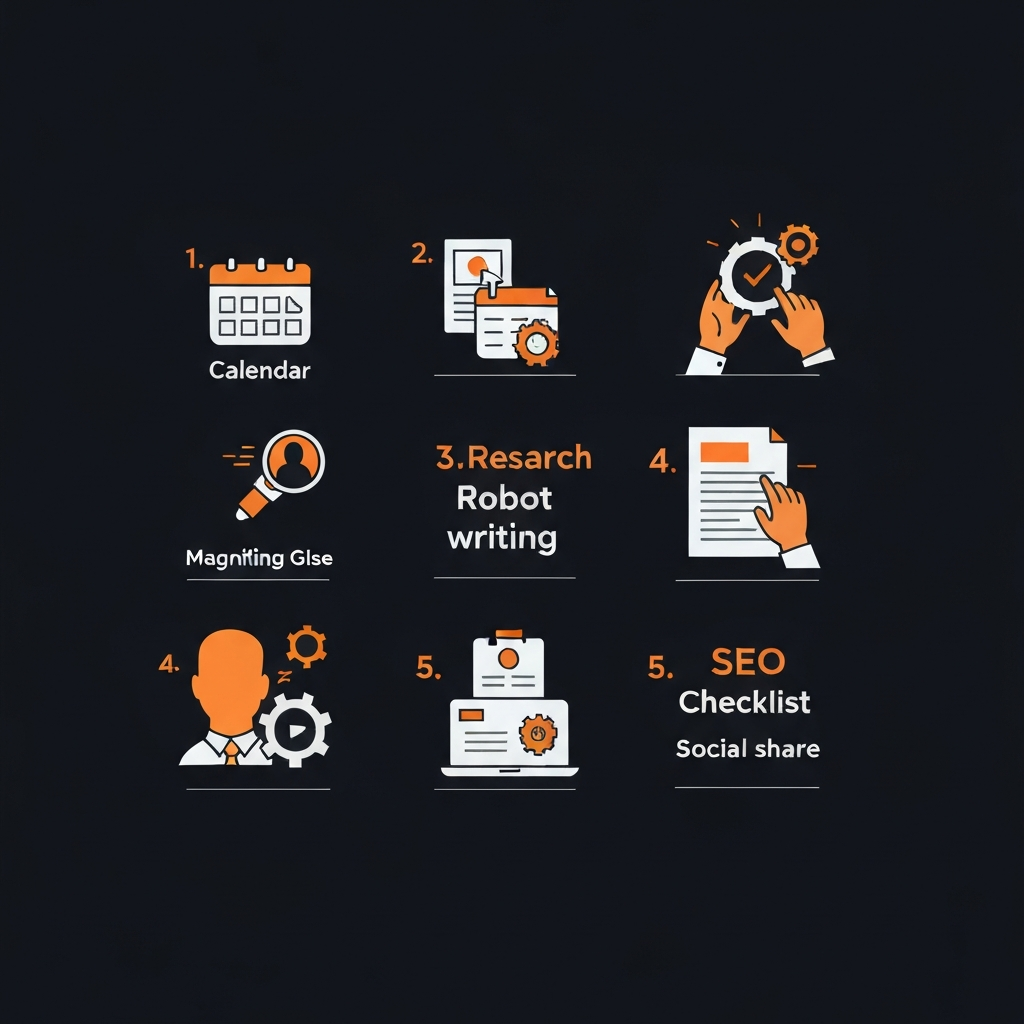
Here’s a practical 5-step workflow for solo creators and small teams:
Step 1 — Define your content calendar
Use Airtable, Notion, or a spreadsheet. List titles, target keywords, publishing dates, and formats. Keep 4–6 weeks of content planned ahead. Connect this calendar to n8n or Zapier so that new rows automatically trigger the rest of the workflow.
Step 2 — Research with AI
Use Perplexity AI or Claude with web search enabled to pull current statistics, quotes, and competitor angles for each topic. Save the source URLs for outbound links. Aim for 3–5 authoritative sources per article — industry reports, original research, and expert commentary carry the most SEO weight.
Step 3 — Draft with your primary writing agent
Claude Opus 4.6 for long-form quality. GPT-5.3 Instant for speed. Feed the agent your brief, target keyword, tone guide, and research notes. The output should be 80–90% usable without significant editing. If you’re using a custom n8n pipeline, this step is fully automated once you trigger the workflow.
Step 4 — Optimise and enrich
Run the draft through Surfer SEO or NeuronWriter for on-page optimisation. Add internal links manually or via Link Whisper. Check readability with Hemingway App. Add schema markup for FAQs and how-to content to improve rich snippet eligibility.
Step 5 — Repurpose and distribute
Feed the published post to Descript or Buffer AI to auto-generate social variants. Schedule across platforms. A single blog post should produce at least 5–8 social assets: a LinkedIn article, three X/Twitter posts, two Instagram captions, and a short video script.
Total human time per piece: 30–45 minutes instead of 4–6 hours.
Real-World Patterns That Work
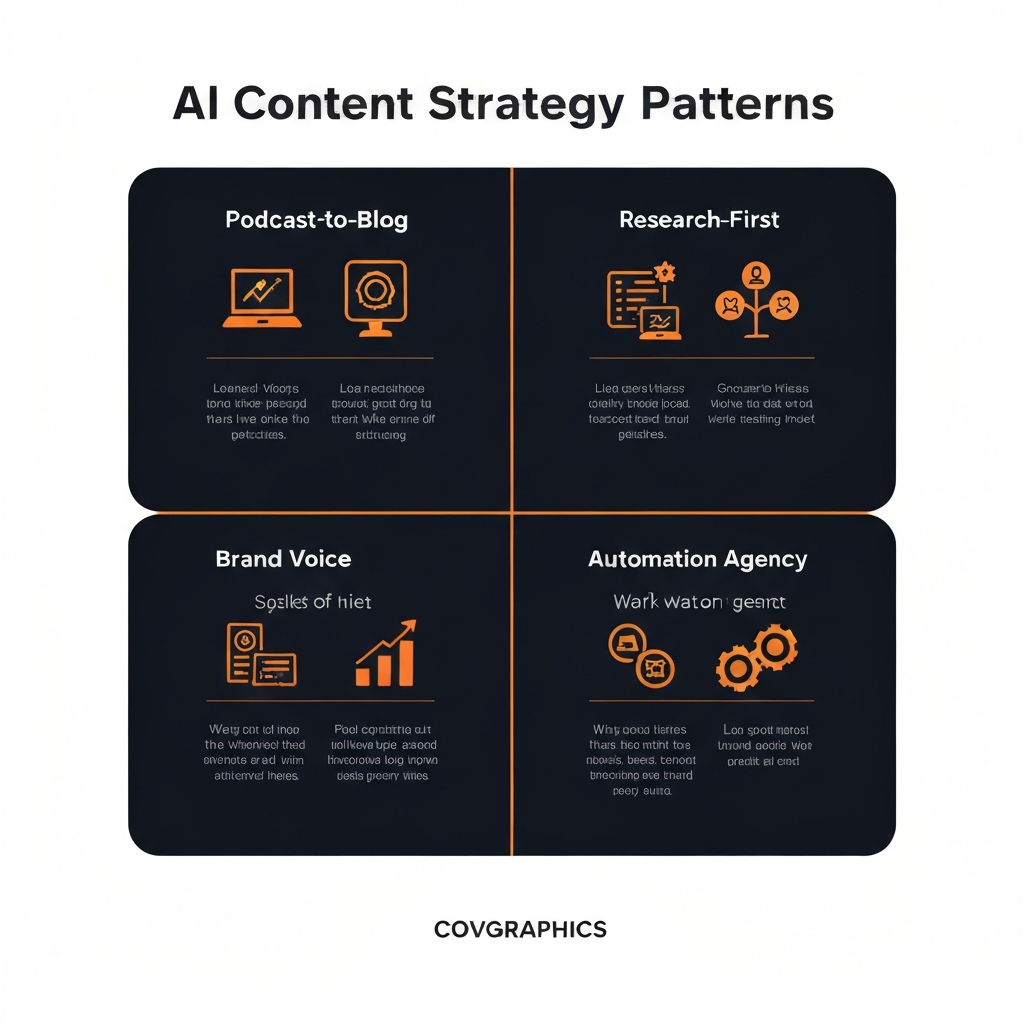
The Podcast-to-Blog Pattern
Record a 30-minute podcast → Descript transcribes and cleans → Claude turns transcript into a 2,000-word blog post → Canva AI generates social cards → Buffer schedules posts. One recording session produces two weeks of content across multiple channels.
The Research-First Pattern
Use Perplexity to gather 5 authoritative sources → paste into Claude with a target keyword → Claude drafts an in-depth guide with proper citations. This produces genuinely useful, well-sourced content that ranks on Google and builds trust with readers. The research-first approach consistently outperforms “write-from-scratch” AI content on search rankings because the depth is real, not fabricated.
The Brand Voice Pattern
Upload 10 of your best existing blog posts to Jasper as brand voice training data → all future drafts match your style automatically. No more editing AI outputs to “sound like you.” This pattern works best for organisations with an established editorial style and a body of published content to learn from.
The Automation Agency Pattern
Build client content pipelines using n8n + Claude. Each client gets a customised workflow: their brand brief, tone guide, and CMS credentials stored in the pipeline config. New articles trigger automatically from a shared Airtable. Deliver 8–12 articles per month per client at dramatically lower cost than a traditional agency. This model is one of the most scalable paths to recurring AI revenue, explored in depth in learnAI’s Make Money with AI pillar guide.
FAQ
What is the best free AI agent for content creation in 2026?
ChatGPT (free tier with GPT-5.3 Instant), Copy.ai’s free plan, and Buffer’s AI assistant are the strongest free options. Claude’s free tier via claude.ai is excellent for longer content. For building custom pipelines, n8n’s community edition is free and covers most automation needs.
Can AI agents fully replace human content writers?
Not entirely, not yet. AI agents handle research, structure, drafting, and optimisation extremely well. But brand voice calibration, genuinely novel insights, and editorial judgment still benefit from a human in the loop. The most effective model in 2026 is AI agent + human editor, not one replacing the other.
How do AI content agents handle SEO?
Top tools like Jasper (with Surfer SEO integration) and dedicated platforms like NeuronWriter optimise content for target keywords, heading structure, internal linking, and semantic relevance. Always pair your writing agent with an SEO layer for publishable content.
Which AI agent is best for a solo content creator?
Claude Opus 4.6 for quality-critical long-form, Sona for personal brand content, and Buffer AI for social distribution. All three have generous free or low-cost tiers to get started. If you’re willing to spend a couple of hours on setup, an n8n + Claude pipeline gives you the most powerful and customisable workflow at minimal ongoing cost.
Are AI-written articles penalised by Google?
Google evaluates content quality, not how it was produced. Well-researched, genuinely useful AI-assisted content ranks well. Thin, low-value AI content does not. The key is using AI agents to produce depth and value, not speed at the expense of quality.
How much does it cost to run an AI content pipeline per month?
A realistic estimate for a solo creator producing 8–10 posts per month: Claude API costs $10–30, GPT-5 API $15–40, image generation $5–15, n8n (self-hosted, free) or cloud plan $20. Total: $50–105/month to produce content that would cost $2,000–4,000+ with a traditional agency. The ROI case is clear.
What is the difference between an AI writing tool and an AI content agent?
An AI writing tool takes your prompt and returns text — one input, one output. An AI content agent takes a goal and completes a multi-step process: it might search the web for research, draft an outline, write a first draft, check SEO, and format for your CMS, all without you touching the keyboard between steps. Agents operate across tools; writing tools operate in isolation.
Conclusion
AI agents have changed content creation from a bottleneck into a competitive advantage. The teams winning in 2026 are not those with the most writers — they’re the ones who’ve built the best AI-augmented workflows.
Start with one tool that fixes your biggest current bottleneck. Add more as you see results. The compounding effect of a well-tuned AI content pipeline is significant: 93% of marketers already use AI to generate content faster, and businesses using AI agents report up to 37% cost savings in marketing operations alongside 3–15% revenue uplift.
The best place to start is always where you feel the most pain. If writing takes too long, begin with Claude or GPT-5. If distribution is your bottleneck, start with Buffer AI. If you’re drowning in video footage, start with Descript. Build from your constraint outward — and automate one step at a time.
Ready to learn AI? Join the learnAI community → learnAI Skool Community