


AI Marketing Tools for Productivity: The Complete 2026 Guide
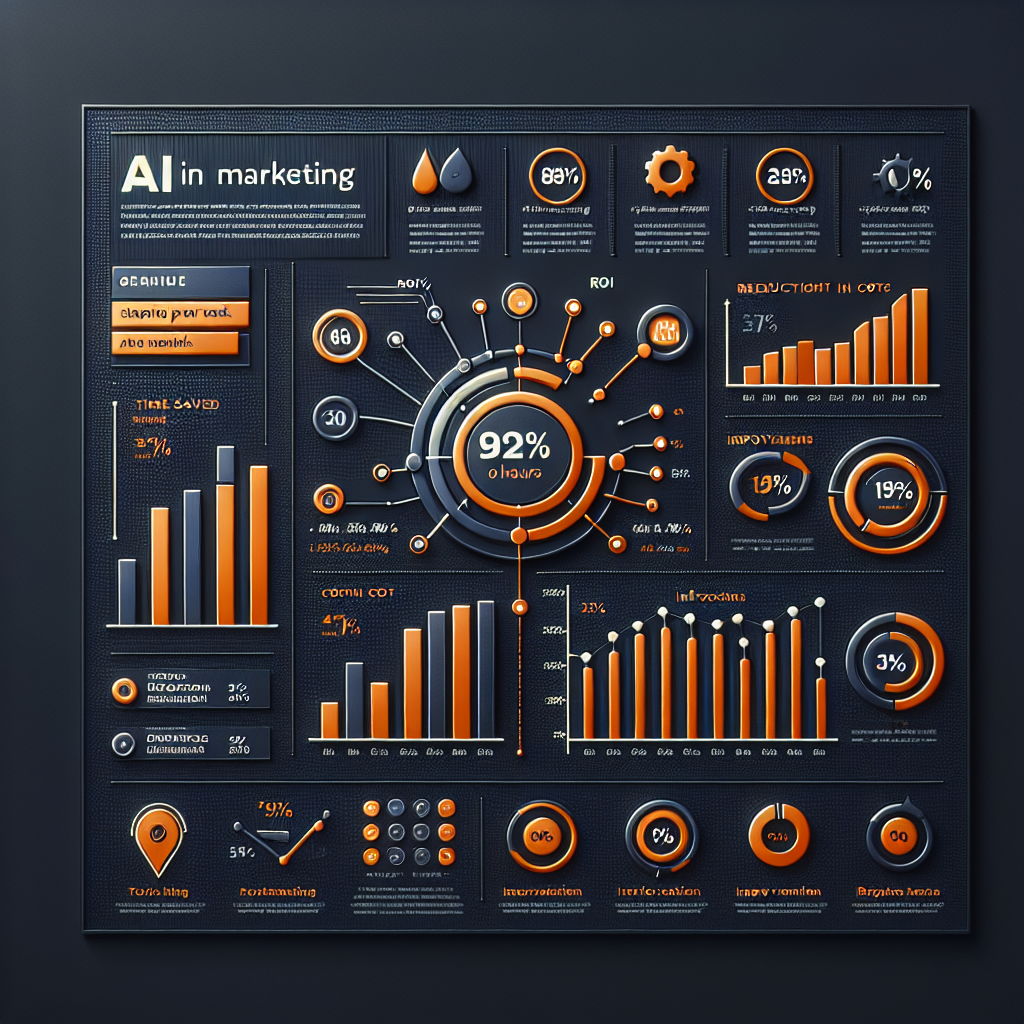
The marketing landscape has fundamentally transformed. In 2026, 78% of marketers now rely on AI-powered automation to drive their campaigns, and those adopting these tools report saving an average of 2.5 hours per employee daily whilst improving output quality by 35%. Companies using AI in their marketing strategies are now experiencing 22% higher ROI and launching campaigns 75% faster than teams relying solely on manual processes. The competitive advantage isn’t just incremental—it’s transformative, and it all hinges on choosing the right AI marketing tools for your team’s unique productivity needs. (See also: Best AI Business Tools: The Complete Guide for 2026) (See also: Free AI Business Tools: The Complete Guide for 2026)
Table of Contents
- What Are AI Marketing Tools?
- AI Content Creation & Copywriting Tools
- AI for Email Marketing & Customer Engagement
- AI-Powered Social Media Management
- SEO and Content Optimisation with AI
- Analytics and Data Intelligence Platforms
- Comparison Table of Top Tools
- How to Choose the Right AI Marketing Tools
- FAQs
- Conclusion
What Are AI Marketing Tools?

AI marketing tools are software platforms that leverage artificial intelligence, machine learning, and natural language processing to automate, optimise, and enhance various aspects of marketing workflows. These tools span multiple disciplines—from content generation and copywriting to audience analysis, campaign optimisation, and performance prediction.
The core value proposition is straightforward: AI handles repetitive, data-intensive tasks whilst freeing your team to focus on strategy, creativity, and relationship-building. Instead of spending hours on ideation, research, and initial drafting, marketers can now generate multiple content variations, analyse competitor strategies, and identify optimal posting times in minutes.
What makes 2026 different from previous years is the maturity and specialisation of these tools. Early AI marketing solutions were generalised and often required significant manual refinement. Today’s platforms are purpose-built for specific marketing functions, integrating seamlessly with existing workflows and delivering production-ready output.
AI Content Creation & Copywriting Tools
Jasper: The Industry Standard
Jasper remains the gold standard for AI-powered copywriting in 2026. Originally built for marketing professionals, Jasper excels at generating high-converting content across ads, emails, landing pages, and social posts. The platform includes 50+ pre-built templates specifically designed for different campaign types and platforms.
What sets Jasper apart is its brand voice customisation. Your team can train the AI to understand your brand’s tone, messaging priorities, and unique selling propositions. This means generated copy doesn’t just sound professional—it sounds like you. The platform also includes a built-in grammar checker and style guide, ensuring consistency across all marketing materials.
Jasper’s knowledge base integration means your AI can reference your product documentation, past campaigns, and brand guidelines whilst generating content. This context-awareness produces remarkably consistent, on-brand output that requires minimal editing. For teams managing multiple brands or sub-brands, Jasper’s ability to maintain distinct voice profiles across accounts is invaluable.
The platform’s command line interface and API access also make Jasper suitable for technically sophisticated teams that want to integrate AI copywriting directly into their existing workflows. Agencies managing dozens of client accounts have reported 60% reductions in copy revision cycles by implementing Jasper systematically across their teams.
Pricing starts at $39 per month for individuals, with team plans offering collaboration features, unlimited brand voices, and priority support. Enterprise clients can negotiate custom pricing and dedicated account management.
Copy.ai: Rapid-Fire Content Generation
Copy.ai takes a different approach, prioritising speed and volume. If you need to generate dozens of email subject lines, ad headlines, or social media captions in a single session, Copy.ai delivers. The platform includes a 90+ template library and works particularly well for e-commerce and SaaS marketing.
The platform’s strength lies in its ability to generate multiple variations quickly. Rather than spending time fine-tuning a single piece of copy, you can generate 10 variations, select your favourites, and refine them. This approach often yields better results and faster iterations. Many conversion optimisation professionals prefer this methodology because testing multiple variations simultaneously produces statistically significant performance data faster than sequential refinement.
Copy.ai’s built-in analytics feature tracks which variations you use and their performance metrics, creating a feedback loop that helps the AI understand your preferences over time. The platform becomes progressively smarter about which variations to suggest based on your selection history.
For startup teams operating with limited budgets, Copy.ai’s affordable pricing combined with strong output quality makes it an excellent foundation before graduating to more specialised tools. Teams have reported generating equivalent content in 20% of the time compared to manual processes.
Copy.ai starts at $49 per month for individual users, with team plans available at higher tiers. The platform also offers API access for teams wanting to embed copywriting capabilities directly into custom workflows.
ChatGPT Plus with GPT-5: The Flexible Foundation
Since GPT-4o was retired in February 2026, ChatGPT Plus with GPT-5 has become the foundation layer for many marketing teams. GPT-5’s improved reasoning and instruction-following make it exceptionally useful for complex marketing tasks like campaign strategy development, competitive analysis, and customer psychology research.
Many teams use ChatGPT as their primary ideation tool, feeding custom prompts and brand guidelines into the system before refining output in specialised platforms like Jasper or Copy.ai.
AI for Email Marketing & Customer Engagement

Klaviyo AI: E-Commerce Email Excellence
Klaviyo dominates the e-commerce email and SMS space, and its AI capabilities in 2026 represent some of the most sophisticated in the industry. The platform uses predictive analytics to identify customers likely to churn, automatically personalise email content based on browsing behaviour, and optimise send times for individual subscribers.
Klaviyo’s Smart Send feature analyses your historical email performance data and predicts the optimal time to send each customer an email to maximise open rates. Rather than sending everyone at the same time, each subscriber receives their message when they’re statistically most likely to engage with it. This personalisation has resulted in documented open rate improvements of 15-25% compared to static send times.
For e-commerce teams, the platform also includes AI-powered product recommendations that learn from customer behaviour patterns and automatically suggest items each customer is most likely to purchase. These recommendations are contextual—if someone abandoned a cart, they see products that complement what they abandoned. If they browsed a category, they see new arrivals in that category. This sophistication produces dramatically higher email conversion rates.
Klaviyo’s AI also powers SMS marketing, identifying which customers prefer email versus SMS and routing messages to each customer through their preferred channel. The platform even optimises message frequency, preventing unsubscribe fatigue by capping messages per customer per week whilst ensuring high-priority campaigns still reach their audience.
Klaviyo’s pricing is based on subscriber count, starting at $20 per month for up to 500 contacts. For growing e-commerce operations, the ROI typically justifies rapid investment—customer lifetime value improvements from personalised messaging often exceed platform costs tenfold.
HubSpot’s AI Email Tools
HubSpot’s email marketing module, powered by its AI assistant, has significantly improved in 2026. The platform now offers subject line optimisation, automatically generating multiple variations and predicting which will generate the highest open rate. The AI also analyses your email content and suggests improvements to clarity, tone, and call-to-action placement.
Beyond email, HubSpot’s AI-powered workflow automation enables complex customer journey automations without requiring engineering input. Workflow rules can now trigger based on predictive scores—for instance, automatically enrolling high-intent leads into a fast-track nurturing sequence. This democratisation of marketing automation means teams without technical resources can implement sophisticated logic previously requiring developer input.
HubSpot’s particular strength is integration with its CRM database. The AI learns from your entire customer history—past emails, sales conversations, website behaviour, and purchase history—to make increasingly intelligent recommendations about which customers to target with which messages. Over time, the system becomes a genuine strategic partner rather than a mechanical tool.
For B2B marketing teams especially, HubSpot’s lead scoring AI has proven transformative. Instead of manually assessing which leads are ready for sales conversations, the AI analyses behavioural patterns and assigns probabilistic scores. Sales teams report 40% improvements in sales efficiency by focusing on highest-scoring leads.
HubSpot’s pricing varies by plan, starting at $50 per month for the Starter tier with email marketing included. Teams using HubSpot’s full ecosystem (CRM, email, analytics, ads) report significantly higher ROI than those using it for email alone due to the integrated intelligence.
Mailchimp AI: The Accessible Option
Mailchimp has democratised AI email marketing for smaller teams. The platform’s AI assistant helps craft email copy, analyse campaign performance, and identify optimal send times. Mailchimp’s strength is its simplicity—teams new to email automation can get sophisticated AI-powered campaigns running without steep learning curves.
The platform also includes segmentation intelligence, automatically suggesting audience segments based on your data that are likely to respond well to specific campaigns.
Mailchimp offers a free tier for up to 500 contacts, with paid plans starting at $20 per month.
AI-Powered Social Media Management
Sprout Social: Sentiment Analysis & Scheduling
Sprout Social’s 2026 platform heavily emphasises AI-powered insights. The system continuously monitors your brand mentions across social platforms, using sentiment analysis to identify emerging issues or opportunities for engagement. The platform’s AI learns your posting patterns and automatically recommends optimal times to post content for maximum reach and engagement.
What makes Sprout Social particularly valuable is the crisis detection capability. The AI identifies when negative sentiment about your brand is rising and alerts you immediately, often before the issue becomes widespread. This early warning has saved brands from public relations disasters by enabling rapid response when problems are still manageable.
Sprout Social’s social listening capabilities are particularly powerful, analysing conversations about your industry, competitors, and brand to surface relevant insights and content opportunities your team should address. Rather than manually searching for industry conversations, Sprout’s AI continuously monitors your competitive landscape and automatically surfaces relevant discussions your team should join.
The platform also includes audience intelligence, identifying the characteristics of your most engaged followers and automatically recommending content angles likely to resonate with your core audience. This AI-powered audience understanding helps teams focus content creation efforts on high-impact topics.
Pricing starts at $249 per month for single-user accounts, with team plans available. Whilst pricing is premium, the crisis prevention and audience intelligence alone often justify the investment for brands managing significant audiences.
Hootsuite AI
Hootsuite’s AI assistant helps teams schedule content across multiple platforms, analyse performance trends, and identify which content types generate the highest engagement. The platform integrates with most major social networks and can automatically schedule optimal times for posting based on your audience’s activity patterns.
Hootsuite’s strength is integration breadth—if your team uses multiple tools (CRM, analytics, email, etc.), Hootsuite can centralise social media management alongside other marketing functions.
Pricing starts at $49 per month.
Buffer: Simplified Social Automation
Buffer focuses on simplicity and affordability. The platform’s AI-powered best times feature suggests when to post each piece of content based on your historical performance data. Buffer also includes analytics to track which posts drive the most engagement and conversions.
For teams just beginning to explore AI-powered social media management, Buffer offers an affordable entry point without overwhelming complexity.
Buffer’s pricing starts at $5 per month per social channel.
SEO and Content Optimisation with AI
Semrush AI Tools
Semrush‘s 2026 platform includes robust AI capabilities across SEO, content, and competitive analysis. The AI-powered keyword research tools help identify high-opportunity keywords for your niche by analysing search volume, competition level, and intent. Rather than guessing which keywords to target, the AI identifies gaps where you can realistically compete.
The content marketing platform’s AI analyser evaluates your drafts against your target keyword and top-ranking competitors, suggesting structural and content improvements to boost your SERP rankings. Importantly, this isn’t just keyword stuffing—the AI understands semantic relationships and user intent, recommending structural changes (adding sections, reordering content, adjusting heading hierarchy) that improve relevance signals to search engines.
Semrush’s AI also powers competitor analysis, automatically tracking your competitors’ backlinks, content, and ranking changes. This intelligence informs your own content strategy—you can identify which of your competitors’ pieces generate the most backlinks and traffic, then create higher-quality variations. Agencies have reported using this competitive intelligence to identify 30-40% more content opportunities than manual brainstorming produces.
The platform’s SEO assistant also includes a content intelligence module that identifies which topics are trending in your industry and predicting which will generate significant search volume in coming months. This forward-looking capability enables proactive content creation rather than reactive response to existing trends.
Semrush pricing starts at $120 per month for the Professional plan. The platform’s breadth of tools means even smaller investments deliver multiple capabilities across keyword research, content creation, rank tracking, and competitor monitoring.
Surfer SEO: Real-Time Content Optimisation
Surfer SEO specialises in content optimisation using AI and competitive data. As you write, Surfer’s AI evaluates your content against top-ranking pages, suggesting optimal word count, structure, keyword density, and heading hierarchy. The platform even includes an AI-powered outline generator that creates SEO-optimised content structures in seconds.
What differentiates Surfer from other SEO platforms is the real-time feedback loop. Rather than writing entire pieces before analysing them, you get continuous guidance as you draft. This immediate feedback dramatically accelerates the writing process—many content creators report finishing optimised pieces 40-50% faster with Surfer’s guidance compared to writing followed by separate optimisation.
Surfer’s content intelligence module analyses your target keywords and tells you exactly how long your article should be, which heading hierarchies work best, which related keywords to naturally incorporate, and even optimal readability metrics. This data-driven approach removes guesswork from SEO content creation.
The platform also includes competitor gap analysis, identifying content your competitors rank for that you don’t. Rather than creating content in a vacuum, you can strategically target topics where ranking opportunities exist but competition remains manageable.
For content teams focused on organic search visibility, Surfer’s real-time feedback loop significantly reduces the revision cycles needed to achieve ranking positions. Teams report achieving Page 1 rankings 50% faster with Surfer than manual optimisation processes achieved historically.
Surfer SEO pricing starts at $99 per month. Subscription includes unlimited content optimisations, making it exceptionally cost-effective for teams producing high content volumes.
Google Analytics 4 with Gemini Integration
Google Analytics 4’s 2026 integration with Gemini AI has transformed how marketing teams interpret data. Rather than diving deep into dashboards to find insights, you can ask Gemini natural language questions about your data. “Which landing pages have the highest bounce rates?” or “How did my conversion rate change week-over-week?” are answered instantly with intelligent analysis.
Gemini also powers predictive analytics, identifying which customer segments are likely to convert or churn based on historical patterns.
GA4 remains free to implement, with premium features available through Google Analytics 360.
Analytics and Data Intelligence Platforms
Cometly: Marketing Attribution Simplified
Cometly brings AI-powered multi-touch attribution to teams of any size. Rather than guessing which marketing channels deserve credit for conversions, Cometly’s AI analyses your entire customer journey and allocates credit intelligently. This data informs where to invest marketing budgets for maximum ROI.
The platform integrates with major ad platforms, CRMs, and analytics tools, creating a unified view of marketing performance.
Cometly pricing starts at $499 per month.
Brandwatch: Competitive Intelligence at Scale
Brandwatch uses AI to monitor online conversations about your brand, competitors, and industry trends across millions of websites, social platforms, and review sites. The AI automatically categorises sentiment, identifies key themes in customer feedback, and surfaces competitive threats or opportunities.
For teams competing in crowded markets, Brandwatch’s comprehensive market intelligence provides the insights needed to stay ahead.
Brandwatch pricing is custom based on your monitoring needs.
Comparison Table of Top AI Marketing Tools

| Tool | Best For | Starting Price | Key Feature |
|---|---|---|---|
| Jasper | Brand-consistent copywriting | $39/month | 50+ marketing templates |
| Copy.ai | Rapid content generation | $49/month | 90+ template library |
| Klaviyo | E-commerce email automation | $20/month | Predictive send time optimisation |
| HubSpot | All-in-one marketing platform | $50/month | AI-powered workflow automation |
| Sprout Social | Social media insights | $249/month | Sentiment analysis & optimal scheduling |
| Semrush | SEO & content strategy | $120/month | Competitor analysis & keyword research |
| Surfer SEO | Content optimisation | $99/month | Real-time SERP optimisation suggestions |
| GA4 + Gemini | Analytics & data insights | Free/Premium | Natural language data queries |
| Cometly | Marketing attribution | $499/month | Multi-touch attribution modelling |
| Brandwatch | Competitive intelligence | Custom | AI-powered market monitoring |
How to Choose the Right AI Marketing Tools
Step 1: Audit Your Current Workflows
Before adopting new tools, map out your existing processes. Where do your team members spend the most time? What repetitive tasks could be automated? Which decisions lack sufficient data? The answers reveal where AI will provide the greatest return on investment.
Step 2: Identify Your Primary Use Case
Are you primarily struggling with content creation? Email performance? Social media scheduling? SEO rankings? Different tools excel at different functions. Rather than adopting an all-in-one platform that does everything adequately, consider best-of-breed solutions for your highest-priority functions.
Run a simple analysis: calculate the cost of your marketing team’s time spent on each function. If your team spends 30 hours weekly on email creation and management, solving that function is worth $1,000+ in weekly savings. Conversely, if social media represents 5 hours weekly, even perfect automation saves only $150-200 weekly. This ruthless prioritisation ensures you invest in solutions with the highest leverage.
Step 3: Consider Integration Requirements
A fantastic tool that doesn’t integrate with your existing stack creates friction. Evaluate whether prospective tools integrate with your CRM, email platform, analytics system, and advertising accounts. Native integrations save significant implementation time.
Step 4: Start Small and Expand
Rather than overhauling your entire marketing operation at once, pilot new AI tools with a small team or single campaign. This approach reduces risk, provides time for your team to develop proficiency, and generates real ROI data to justify broader adoption.
A typical pilot programme should run 30-60 days, involve 2-3 team members, and target a specific function (e.g., email subject lines, social media scheduling, or one content series). At pilot’s end, measure results rigorously: time saved, content quality improvements, engagement improvements. This data provides the foundation for persuading leadership and the broader team to adopt the tool organisation-wide.
Step 5: Budget for Implementation and Training
Beyond software costs, factor in implementation time, team training, and the learning curve. Many teams underestimate these costs and experience slower-than-expected ROI as a result. A typical implementation budget should include:
- Platform setup and configuration (8-16 hours for most tools)
- Team training and competency development (2-4 hours per team member)
- Process redesign to accommodate new workflows (4-8 hours)
- Initial output refinement and quality assurance (4-8 hours)
- Ongoing optimisation and performance tuning (2-4 hours monthly)
Teams that allocate adequate training budget achieve proficiency 50% faster and realise ROI 30% higher than those treating implementation as a simple installation process.
Frequently Asked Questions

What’s the difference between AI marketing tools and traditional marketing software?
Traditional marketing software automates workflow execution (scheduling emails, publishing social posts) but requires humans to create the core content. AI marketing tools automate content creation and decision-making itself, generating copy, identifying optimal timing, and even predicting outcomes. This represents a fundamental difference in how much of the marketing process AI handles.
Will AI marketing tools replace human marketers?
No. The most successful marketing teams in 2026 combine AI efficiency with human creativity and strategic thinking. AI excels at volume, speed, and data-driven optimisation. Humans excel at empathy, cultural relevance, and complex strategic decisions. The winning formula combines both.
How much can I really save by using AI marketing tools?
According to 2026 data, teams using AI marketing automation report saving an average of 2.5 hours per employee daily. For a team of four marketers, that’s 10 hours per day or 50 hours per week. Valued at $35 per hour (typical marketing wages), that’s $1,750 per week in labour savings alone. Most AI tool subscriptions cost $200-500 per month per tool, so ROI is typically achieved within the first month.
Which AI marketing tool should I start with?
If you’re new to AI marketing, start with either ChatGPT Plus (GPT-5) for general marketing tasks or a specialised tool matching your biggest bottleneck. ChatGPT provides the broadest foundation for exploring AI capabilities, whilst specialised tools like Jasper, Klaviyo, or Semrush deliver faster results within specific functions.
Are there privacy or compliance concerns with AI marketing tools?
Yes. Ensure any tool you adopt complies with GDPR, CCPA, and other relevant regulations. Many platforms have addressed these concerns by 2026, but verify that customer data is encrypted, properly stored, and never used to train public AI models without explicit consent.
How do I maintain brand voice consistency with AI-generated content?
Most modern AI marketing platforms allow you to train the AI on your brand guidelines, previous content, and tone preferences. Provide examples of your best content and explicitly state your brand voice requirements. The more specific your training, the more consistent the output.
Conclusion
The 2026 marketing landscape rewards teams that strategically adopt AI to amplify human capabilities. The data is clear: marketers using AI tools save significant time, improve output quality, and achieve measurably better results. Yet adoption isn’t about using every available tool—it’s about identifying your highest-leverage opportunities and implementing tools that directly address those needs.
Whether you’re struggling with content creation velocity, email performance, social media consistency, or SEO rankings, a mature AI tool exists to help. Start by auditing your current bottlenecks, implement a focused pilot programme, and measure results rigorously. The teams winning in 2026 aren’t necessarily using more tools than their competitors—they’re using the right tools with discipline and strategic intentionality.
For more insights on AI applications across your business, explore our complete AI learning resources at learnai.sk, where we cover everything from AI fundamentals to advanced applications in marketing, sales, operations, and beyond.