


AI Content Creation Tools for Productivity: The Complete 2026 Guide
Introduction
In 2026, artificial intelligence has fundamentally transformed how organisations approach content creation. Rather than viewing AI as a threat to creative work, forward-thinking businesses are leveraging intelligent tools to amplify productivity, scale content operations, and maintain consistency across multiple channels. The global AI content creation market is now valued at $4.2 billion, growing at a compound annual growth rate (CAGR) of 26.3%, with adoption rates among marketing teams increasing from 38% in 2024 to 64% in 2026, according to the Content Marketing Institute’s latest research. (See also: Best AI Business Tools: The Complete Guide for 2026) (See also: Free AI Business Tools: The Complete Guide for 2026)
The modern content creator’s toolkit looks radically different from five years ago. Where teams once spent weeks crafting long-form content, managing image assets, producing video, and distributing across social channels, integrated AI platforms now enable a single person to execute these tasks with quality that rivals team efforts. Yet success with these tools requires more than simply clicking a button—it demands strategic thinking about workflow integration, quality assurance, and maintaining authentic human connection despite automation. This guide explores the complete landscape of AI content creation tools available in 2026, helping you build a technology stack that genuinely improves your productivity without compromising your brand voice.
Table of Contents

- What Is AI Content Creation?
- The State of AI Content in 2026
- AI Writing & Copywriting Tools
- AI Image & Visual Content Tools
- AI Video Creation Tools
- AI Audio & Podcast Tools
- AI SEO Content Tools
- AI Social Media Content Tools
- Comparison Table
- Building Your AI Content Stack
- Quality Control: Making AI Content Feel Human
- Frequently Asked Questions
- Conclusion
What Is AI Content Creation?
AI content creation encompasses the use of machine learning algorithms, natural language processing, and generative models to produce or substantially assist in the production of written, visual, audio, and video content. These tools don’t replace human creativity—rather, they automate repetitive tasks, generate initial drafts, enhance existing assets, and provide data-driven recommendations that help creators work faster and smarter.
The fundamental technology behind modern content creation AI relies on large language models trained on billions of tokens of text, image diffusion models that generate visuals from natural language descriptions, and neural networks capable of understanding context, tone, and audience intent. When you instruct an AI writing tool to create a blog post outline or an image generator to produce a product mockup, you’re engaging with systems trained to recognise patterns in professional content and extrapolate from those patterns to create original outputs.
Crucially, AI content creation tools operate most effectively when guided by human judgment. They excel at generating options, expanding on ideas, polishing existing work, and executing at scale. They struggle with nuanced brand voice, deeply original strategic thinking, and emotional authenticity that builds genuine audience connection. The most productive teams in 2026 treat these tools as collaborative partners—providing direction, context, and editorial oversight while letting AI handle the heavy lifting of production.
The State of AI Content in 2026
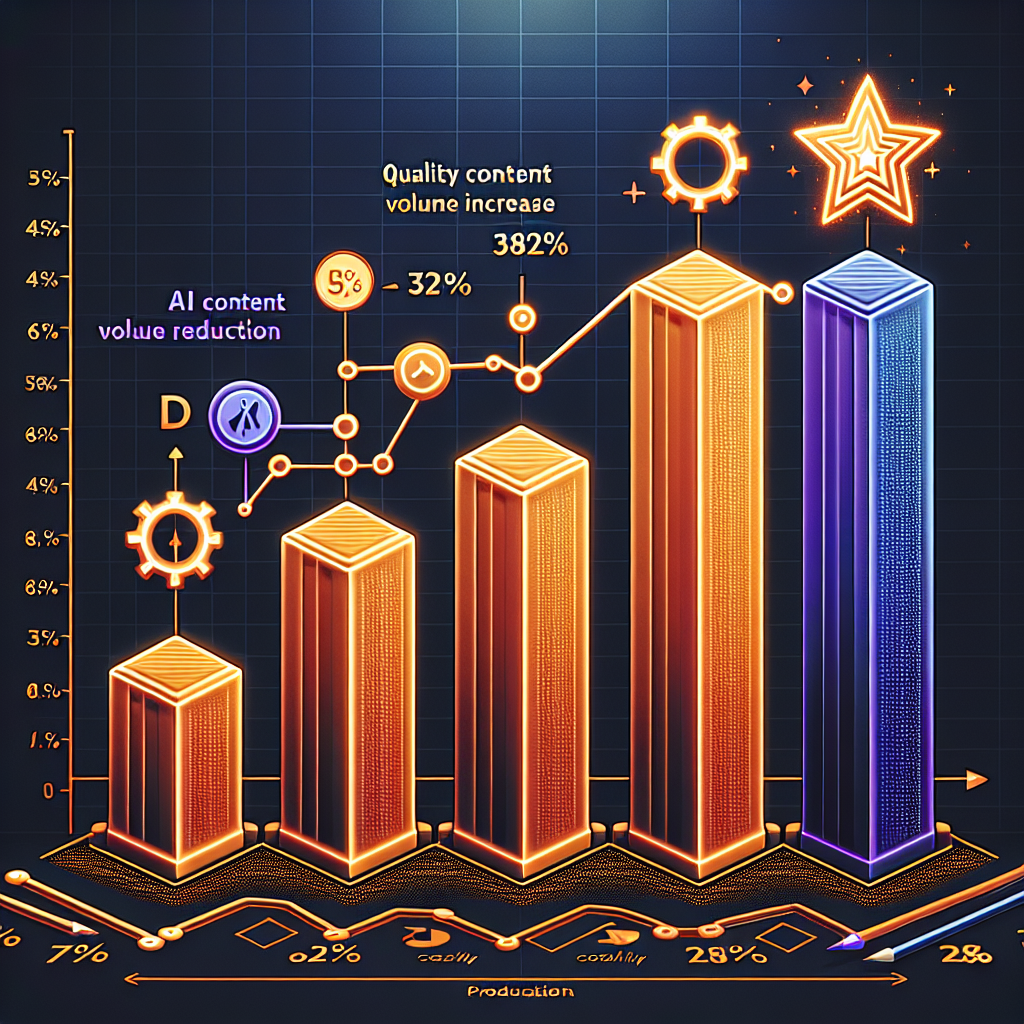
The AI content landscape has matured significantly since 2024. Enterprise adoption has accelerated dramatically: according to McKinsey’s 2026 State of AI report, 71% of organisations now use generative AI in at least one business function, compared to 50% in 2023. In marketing and content specifically, adoption climbs even higher. A HubSpot study released in February 2026 found that 73% of marketing teams employ AI-powered writing tools, 58% use AI for image generation, and 42% leverage AI for video production.
This broad adoption hasn’t erased quality concerns. A Gartner survey from 2025 revealed that organisations using AI content tools report average time savings of 34% in content production workflows, but quality issues in AI-generated content remain the top implementation challenge, cited by 67% of respondents. This has spawned an entire ecosystem of quality assurance tools and practices—from AI-detection software that flags content likely generated without human review, to hybrid workflows where AI drafts are substantially rewritten before publication.
Cost dynamics have shifted fundamentally. API pricing for most major models has dropped by 60-80% since 2023, making AI content tools economically viable for small teams and independent creators. Simultaneously, the quality ceiling has risen sharply—current models produce significantly fewer obvious errors and stylistic oddities than their predecessors. By most measures, the “AI-written” content published by professional teams in 2026 is nearly indistinguishable from human-written content to the average reader.
Regulatory pressure is beginning to shape the market. The UK introduced mandatory AI disclosure requirements in 2025, requiring organisations to disclose AI involvement in content above certain thresholds of automation. The EU’s AI Act continues to tighten constraints around high-risk applications. These developments have pushed responsible AI adoption—transparency labelling, content auditing, and hybrid human-AI workflows are now industry expectations rather than optional niceties.
AI Writing & Copywriting Tools
Jasper
Jasper remains the market leader in AI writing platforms for marketing and content teams. Built on top of advanced language models and trained on millions of successful marketing campaigns, Jasper excels at generating promotional copy, blog introductions, email sequences, and long-form content briefs. The platform offers mode-switching capabilities—you can shift from “casual” to “formal” tone, request generation in any of 30+ languages, and template-based workflows designed specifically for common marketing tasks.
The advantage Jasper maintains over competitors is sophistication in brand voice modelling. The platform allows teams to train custom models on existing content, building a digital imprint of how the brand writes. This means repeated use produces increasingly consistent output that mirrors your existing communication style. For enterprise teams managing multiple brand properties, this capability alone justifies the platform’s premium pricing tier.
Copy.ai
Copy.ai serves as an accessible alternative for smaller teams and solopreneurs. The platform’s interface prioritises simplicity—you select a task (landing page copy, ad headline, social post, etc.), provide context, and the AI generates options. Copy.ai integrates directly with common tools like Gmail, Shopify, and WordPress, allowing you to draft content without leaving your existing workflow. Pricing starts at the free tier and scales affordably for growing usage.
The platform’s real strength lies in its expansion features. Write one paragraph and Copy.ai will generate three variations; write one headline and it produces a dozen options ranked by predicted effectiveness. This is genuinely useful when facing decision fatigue about promotional messaging—you’re given data-backed options rather than unlimited subjective variation.
Writesonic
Writesonic positions itself as a specialised AI tool for performance marketing. It integrates tight feedback loops with copywriting best practices, producing output specifically optimised for conversion-focused channels like Google Ads, Facebook ads, and landing pages. The platform includes built-in A/B testing simulation—you can generate multiple ad variations and the system estimates which might perform best based on historical performance data.
What distinguishes Writesonic is its focus on commercial intent. If your goal is generating marketing copy that drives clicks and conversions rather than building thought leadership, this platform’s specialisation becomes valuable. It’s less suited to long-form content, but remarkably effective for the short, punchy copy that fuels paid acquisition.
ChatGPT for Content
ChatGPT, powered by OpenAI’s GPT-5 flagship model (ChatGPT 3.5 and GPT-4o were deprecated in February 2026), has evolved into a genuine content creation tool rather than merely a chatbot. With GPT-5’s improved instruction-following and reduced hallucination rates, the platform reliably handles everything from full-article generation to detailed outline creation. The reasoning capabilities in GPT-5 mean it can now handle multi-step content projects—researching, structuring, drafting, and revising—within a single conversation.
For teams already embedded in OpenAI’s ecosystem, ChatGPT offers tremendous leverage. It’s not optimised for marketing like Jasper, but it’s arguably more flexible—capable of handling niche industries, technical content, and unconventional formats that specialised tools might struggle with. Combine it with GPT-5’s native web browsing and you have a platform that can research, draft, and cite sources with minimal user intervention.
Claude for Enterprise Content
Claude, Anthropic’s flagship conversational AI, has gained significant traction in 2026 for content creation tasks. Claude’s particular strengths lie in nuanced writing requiring genuine thought about audience, tone, and structure. Teams using Claude for content report that the AI produces fewer generic, template-like outputs compared to other models. This comes at a trade-off: Claude is slower to generate basic copy variations, but superior when the content task requires thoughtfulness rather than volume.
Claude’s 200,000-token context window enables it to handle extremely long documents and research-heavy projects. You can upload an entire competitive analysis and ask Claude to synthesise it into original content—a capability that proves invaluable for enterprise strategy pieces and comprehensive guides.
AI Image & Visual Content Tools

Midjourney
Midjourney dominates the professional AI image generation landscape in 2026. Its quality bar remains extraordinarily high—outputs rival stock photography in many cases and substantially exceed it in customisation and uniqueness. Midjourney excels at conceptual imagery, detailed scene composition, and rendering specific artistic styles. The platform has evolved significantly; modern versions handle fine details that earlier iterations butchered, produce consistent character faces across multiple images, and interpret complex compositional instructions.
For content creators building hero images, blog graphics, and visual assets for social media, Midjourney is the standard. The subscription-based pricing ($8-80/month depending on tier) provides tremendous value for teams generating multiple images weekly. The learning curve is steeper than alternatives—crafting effective Midjourney prompts requires understanding composition, art direction, and the tool’s particular language. This complexity is a feature, not a bug: it ensures outputs reflect genuine creative direction rather than generic AI defaults.
DALL-E 3
DALL-E 3, OpenAI’s latest image generation model, prioritises safety and instruction-following over maximum stylistic control. It refuses to generate images that could cause harm, maintain extreme consistency across variations, and benefits from integration with ChatGPT—you can use natural conversation to iterate on image concepts. DALL-E 3 is more accessible than Midjourney for new users; you don’t need to learn special syntax, just describe what you want.
The trade-off: DALL-E 3 is somewhat more conservative in pushing artistic boundaries. It excels at straightforward, clear imagery—product mockups, lifestyle photography, professional portraits—but struggles with avant-garde concepts or hyper-detailed scene composition. For business content where professional polish matters more than artistic experimentation, DALL-E 3 is excellent.
Canva AI
Canva remains the world’s most accessible design platform, and the 2026 version integrates AI throughout the entire workflow. Use natural language to describe a social media graphic and Canva generates initial layouts with on-brand fonts, colours, and imagery. The AI can suggest design variations, automatically adjust designs for different platforms, and generate images for specific placeholders. For non-designers creating marketing assets, Canva AI removes nearly all friction.
The limitations are real: Canva AI doesn’t match Midjourney for fine artistic control, and templates-based generation sometimes produces predictable, formulaic designs. But for organisations that want AI-assisted content without requiring design expertise, Canva is unbeatable. The platform’s strength is democratisation—literally anyone can create genuinely professional-looking assets.
Adobe Firefly
Adobe Firefly, Adobe’s generative fill tool integrated throughout Creative Cloud, enables sophisticated image editing and creation within professional workflows. You can extend images, fill missing areas, generate entirely new sections based on content-aware technology, and create variations on existing assets. For users already on the Creative Cloud (designers, photographers, video editors), Firefly represents seamless integration of AI into existing tools.
Firefly’s advantages accrue to professionals with existing design expertise. It’s less useful as a standalone tool for non-designers compared to Canva, but incomparably more powerful when you already know Photoshop or Illustrator. The tight integration with professional workflows means you can apply generative AI to the final 10% of a design rather than starting from scratch—often a more efficient approach.
AI Video Creation Tools
Runway
Runway has become the general-purpose AI video platform for content creators. The toolkit includes AI-powered video generation, background removal, motion tracking, colour grading, and more. In 2026, Runway’s video generation capabilities have matured sufficiently for use in professional content—the platform can generate realistic multi-second video sequences from text descriptions, though results are still more polished when starting from existing footage rather than generating from pure text.
Runway excels at video manipulation and enhancement. Use it to remove unwanted objects from footage, extend scenes, or add visual effects—tasks that would require professional VFX skills or expensive outsourcing. For social media creators, YouTubers, and marketing teams, Runway’s speed and ease of use justify its cost. The learning curve is gentle; most features are discoverable through the interface.
Synthesia
Synthesia specialises in avatar-based video generation, perfect for explainer videos, training content, and promotional videos. Provide a script and Synthesia generates video of a realistic avatar presenting your content. The avatars speak in natural-sounding voices (or you can use your own voice), move naturally, and maintain professional appearance. For organizations producing high volumes of training or explainer content, this is transformative.
The advantage: Synthesia requires only a script. No camera, no filming, no editing. The disadvantage: the output is fundamentally limited to talking-head format. If you need dynamic cinematography, product demonstrations, or complex visual storytelling, Synthesia alone isn’t sufficient. It’s best used as one component of a larger video content strategy.
HeyGen
HeyGen similarly focuses on video synthesis with avatars, but emphasises likeability and naturalness of the digital presenter. HeyGen avatars exhibit subtle micro-expressions and gestures that create more engaging viewing experiences than purely mechanical alternatives. The platform also supports video translation and lip-syncing—record a video in English and HeyGen automatically generates versions with avatars speaking in other languages with properly synchronised mouths.
For organisations with international audiences or multilingual content needs, HeyGen’s translation capabilities represent genuine time savings. Creating video content in 5 languages traditionally requires hiring multilingual talent and re-recording. HeyGen does it algorithmically.
Pictory
Pictory takes a different approach: convert long-form video or written content into short, social-media-optimised clips. Provide a YouTube video or blog post and Pictory generates 30-second TikTok, Instagram Reels, and YouTube Shorts automatically. The platform uses AI to identify the most engaging sections, adds captions, applies effects, and formats for each platform’s specifications.
For content teams fighting the constant battle of repurposing long content into short-form, Pictory dramatically accelerates the process. You still need to review and approve outputs, but Pictory handles the mechanical work of identifying moments worth clipping and formatting for each platform.
AI Audio & Podcast Tools
ElevenLabs
ElevenLabs operates the highest-quality text-to-speech technology in widespread use. Voices sound remarkably natural—many listeners won’t immediately recognise they’re synthetic. The platform offers voice cloning (train a custom voice on samples of your own voice), multilingual support, and emotional tone variation. For content creators wanting to add professional narration to videos or convert written content into audio, ElevenLabs is the standard.
Podcasters use ElevenLabs to generate intro/outro bumpers with custom voices. YouTubers use it to add voiceover to video content without expensive voice talent. Business use cases include audiobook generation and accessibility-focused audio versions of written content. Pricing scales from generous free tiers to enterprise plans.
Murf
Murf provides similar text-to-speech capabilities with particular strength in generating multiple voice options for a single project. Need a male and female voice for a dialogue? Murf generates both simultaneously. The platform includes video integration—upload video and Murf matches voiceover timing to video edits automatically. This is tremendously useful for explainer video creators.
Murf’s voice library is excellent; you have genuinely different-sounding options rather than slight variations on a single voice model. This is particularly valuable for content where you want distinct characters or need voice variation to maintain audience engagement.
Suno
Suno generates original music. Describe the style and mood, and Suno creates original compositions with vocals if desired. The output quality varies (simple instrumental music generally exceeds vocal quality), but for creators needing background music, podcast intros, or original compositions without paying composer fees, Suno is remarkable. The generated music is royalty-free within Suno’s terms.
The limitation: Suno-generated music often carries unmistakable “AI music” characteristics that astute listeners recognise. It works well for background music and informal content, but less well if you need music indistinguishable from professional composition. Still, for solo creators and small teams, Suno eliminates what would otherwise be expensive licensing requirements.
Descript
Descript has evolved into a complete podcast and video editing platform with sophisticated AI capabilities. Upload audio and Descript automatically transcribes it; edit the transcript and the audio edits simultaneously. Remove filler words (“um”, “uh”, “like”) with one click. Create video highlights automatically by identifying the most engaging sections of podcast audio.
For podcast creators, Descript is genuinely revolutionary. The transcript-as-editable-source approach means you can podcast without deep technical audio editing skills. Combine this with AI features—automatic intro/outro detection, speaker identification, transcription that runs in real time—and you have a platform that reduces podcast production time by 50% or more.
AI SEO Content Tools
Surfer SEO
Surfer SEO analyzes top-ranking pages for your target keyword and provides AI-generated recommendations for your content. The platform uses natural language processing to understand the semantic structure of high-ranking content, then tells you the optimal word count, heading structure, keyword density, and topical coverage for your article to rank competitively.
Importantly, Surfer SEO can generate entire articles automatically based on its analysis. The generated content follows SEO best practices discovered through analysing thousands of successful pages. For teams optimising new content for search visibility, Surfer SEO provides both the blueprint and the construction materials.
Clearscope
Clearscope similarly analyzes competitor content to guide content creation, but emphasises topical depth and semantic relationship mapping. The platform identifies the specific concepts, entities, and relationships that successful content on a topic addresses. This is particularly valuable for complex topics where semantic relevance matters more than keyword frequency.
Clearscope integrates into Google Docs and WordPress, allowing real-time feedback as you write. The platform won’t write content for you, but it functions as an expert editor constantly whispering suggestions: “this subtopic appears in 8 of the top 10 results, maybe address it more thoroughly” or “this concept appears frequently; consider expanding this section.”
MarketMuse
MarketMuse brings competitive intelligence to content planning. The platform analyses your entire domain and competitor domains to identify content gaps—topics you should be covering but aren’t, topics your competitors dominate that you should contest, and emerging topics rising in search traffic. For enterprise content teams, this transforms content strategy from intuition-driven to data-driven.
MarketMuse also provides AI-generated content recommendations and can generate article briefs automatically. Unlike pure content generators, MarketMuse’s strength is in strategy—telling you what to write—rather than writing itself.
Semrush AI Writing Assistant
Semrush integrated AI throughout its platform. The AI Writing Assistant uses keyword and SEO data to generate content outlines, full articles, and meta descriptions optimised for your target keywords. The advantage: every piece of content generated is informed by Semrush’s database of search performance data. You’re not just getting well-written content; you’re getting content specifically optimised for search visibility based on millions of data points.
AI Social Media Content Tools

Hootsuite AI
Hootsuite integrated AI content generation directly into its social media management platform. Write a brief concept and Hootsuite generates a dozen ready-to-post variations optimised for different platforms (Instagram, TikTok, LinkedIn, etc.). The platform also includes AI-powered caption generation for images—upload a photo and Hootsuite creates platform-specific captions automatically.
For teams managing multiple social channels, this acceleration is meaningful. You write once, and AI generates platform-specific variations instantly, eliminating the manual work of adapting content to each platform’s norms.
Buffer AI
Buffer similarly added AI capabilities to its scheduling and management platform. The AI can analyse your audience and suggest optimal posting times, generate captions for media, and create content variations. Buffer’s approach is slightly more conservative than some competitors—the generated content is solid but sometimes formulaic—but integration with the Buffer publishing workflow makes it genuinely frictionless.
Lately AI
Lately AI specialises in repurposing long-form content into social media posts. Upload a blog post, video, or podcast, and Lately identifies the most social-friendly sections and transforms them into ready-to-post social content. The platform uses AI to understand which parts of your content are most likely to drive engagement, then extracts and reframes those elements for social audiences.
For teams producing substantial long-form content but struggling to translate it into effective social engagement, Lately solves a genuine problem—it dramatically accelerates the content repurposing process.
Comparison Table
| Tool Category | Tool Name | Primary Strength | Best For | Price Range |
|---|---|---|---|---|
| Writing | Jasper | Brand voice consistency | Marketing teams | $39-125/month |
| Writing | Copy.ai | Simplicity & templates | Solopreneurs | Free-$49/month |
| Writing | ChatGPT (GPT-5) | Flexibility & depth | Technical/niche content | $0-120/month |
| Writing | Claude | Thoughtful, nuanced output | Long-form & strategy | Free-$20/month |
| Images | Midjourney | Professional art direction | Hero images & graphics | $8-80/month |
| Images | DALL-E 3 | Safety & accessibility | Professional business use | $0-20/month |
| Images | Canva AI | Ease & design templates | Non-designers | Free-$240/year |
| Images | Adobe Firefly | Professional integration | Creative Cloud users | Included in subscription |
| Video | Runway | Speed & versatility | Social creators & marketers | $12-96/month |
| Video | Synthesia | Avatar efficiency | Training & explainers | $25-480/month |
| Video | HeyGen | Naturalness & translation | Multilingual content | $5-600/month |
| Video | Pictory | Content repurposing | Short-form social content | $12-120/month |
| Audio | ElevenLabs | Voice quality | Narration & audiobooks | Free-$330/month |
| Audio | Murf | Voice variety | Dialogue & explainers | Free-$60/month |
| Audio | Descript | Podcast editing | Podcast production | $12-34/month |
| Audio | Suno | Original composition | Background music | Free-$30/month |
| SEO | Surfer SEO | Content optimisation | Search-focused writers | $99-399/month |
| SEO | Clearscope | Semantic depth | Topic development | $180-1000/month |
| SEO | MarketMuse | Strategic planning | Enterprise strategy | Custom pricing |
| SEO | Semrush | Data integration | Competitive analysis | $120-450/month |
| Social | Hootsuite | Multi-channel management | Social teams | $49-700/month |
| Social | Buffer | Integration simplicity | Social scheduling | Free-$99/month |
| Social | Lately AI | Repurposing efficiency | Content recyclers | Free-$299/month |
Building Your AI Content Stack
The most productive content teams don’t rely on a single tool. Instead, they build a stack—a curated collection of complementary AI tools that cover their specific workflow from research through publication.
A typical enterprise content stack might look like:
Research & Strategy: Start with SEO tools like Semrush or MarketMuse to understand what content you should be creating. This is decision-making layer—AI helps you decide what to build before spending creative effort.
Outline & Brief Generation: Use ChatGPT or Claude to transform raw research into structured outlines. Provide competitor articles and your brief, and have the AI synthesise a detailed outline addressing all key concepts. This step takes roughly 20% of the content creation time but dramatically improves final quality.
First Draft: Leverage specialised writing tools based on content type. For marketing copy, use Jasper or Copy.ai. For long-form articles, use ChatGPT’s extended capabilities. For SEO-optimised content, use Surfer SEO’s generation features. The key insight: different tools have different strengths; let each tool do what it does best.
Enhancement & Variation: Once you have a first draft, use the same AI tools to generate variations. Create multiple introductions and pick the strongest. Generate several different ways to explain complex concepts. This is where AI truly shines—not in creating from scratch, but in rapid iteration.
Visual Content: Generate images using DALL-E 3 for professional business content, Midjourney for artistic or conceptual imagery. Use Canva AI to generate graphics and layouts. For video, choose between Runway for existing footage manipulation, Synthesia for avatar-based explanation, or Pictory for repurposing to short-form.
Audio & Repurposing: Use ElevenLabs for narration. Use Descript for podcast editing. Use Lately for social media extraction.
Publication & Social: Schedule through Hootsuite or Buffer, which will generate platform-specific variations. For each social platform, the AI variants should be reviewed and approved, but substantial manual rewriting is unnecessary.
Critical rule: This entire stack should reduce your team’s hands-on time by 50-70%, not eliminate human judgment. Every output requires human review. You’re using AI to accelerate execution of decisions you’ve already made, not to automate decision-making itself.
Quality Control: Making AI Content Feel Human
AI-generated content often carries telltale markers. Generic phrasing. Bullet point structures. Excessive qualification language. The kind of homogenised, committee-written tone that characterises content generated without strong editorial direction.
The antidote is systematic quality control:
Authenticity Review
Read every piece of generated content aloud. You’ll catch awkward phrasing that looks okay visually but sounds unnatural when spoken. Listen for generic corporate language and replace it with genuine voice. AI works from patterns; your job is to inject specificity that breaks those patterns.
Specificity Enhancement
AI tends toward generality. If the generated content says “many businesses struggle with content creation,” your job is to replace that with specific, researched examples. Add data. Add quotes. Add particular customer stories. The generic statement becomes memorable when anchored to concrete reality.
Voice Consistency
Most AI outputs lack strong, distinctive voice. Compare generated content against your existing body of work. Is the tone matching? The sentence structure? The vocabulary? Make targeted edits to restore consistency. This is where AI editing tools (like Clearscope or Claude’s editing mode) help—they can identify inconsistencies you might miss.
Fact Checking
AI hallucinates. It confidently invents citations, misquotes statistics, and creates false details. Your responsibility is systematic fact-checking. Verify every statistic. Verify every quotation. If you can’t quickly verify something, remove it or flag it as potentially unreliable. This is non-negotiable for published content.
Originality Verification
Use plagiarism detection tools (Copyscape, Turnitin) on all AI-generated content. Most commercial AI tools don’t intentionally copy, but patterns in training data sometimes surface verbatim. Verify that your content is genuinely original.
Human Judgment
Reserve some portion of every content piece for purely human creativity. Maybe it’s the introduction. Maybe it’s an example. Maybe it’s the conclusion. The point: make sure some percentage of published content reflects distinctly human thinking, not just AI-accelerated execution. This maintains authenticity and keeps your voice in the content.
Frequently Asked Questions
Is AI-generated content identifiable?
Not reliably, and increasingly less so. AI detection tools exist, but they’re imperfect—false positive and false negative rates are both high. More importantly, well-edited AI content is genuinely indistinguishable from human writing. The question isn’t whether AI-generated content “reads like AI”—modern content doesn’t—but whether it’s been thoughtfully edited and fact-checked. A well-edited AI article is more valuable than a sloppily written human article.
Will Google penalise AI-generated content?
Google explicitly permits AI-generated content if it meets quality standards and genuine expertise requirements. The search engine cares about usefulness to readers, not the method of production. That said, low-quality, low-effort AI content gets penalised. The distinction is effort and editorial care, not the source of the initial draft.
How much cheaper is AI content creation?
Dramatically cheaper. A professional freelance writer typically costs $100-250 per 1000 words. An AI tool handles the same output for $1-5 per 1000 words. For teams, this means either substantial cost savings or the ability to increase content volume dramatically on the same budget. The trade-off: you need editorial overhead to ensure quality. Budget-wise, you’re trading writer costs for editor costs—you need fewer creators but more editorial review.
Can AI maintain my brand voice?
Yes, if you provide training. Feed the AI examples of your existing content and explain your voice guidelines. Claude, Jasper, and ChatGPT all allow this. After training, generated content increasingly mirrors your voice. However, this requires initial setup work and ongoing refinement.
What’s the best tool to start with?
Start with ChatGPT (GPT-5) or Claude. Both are accessible, free or low-cost, and incredibly versatile. Neither is optimised for any specific task, but both handle everything reasonably well. Once you understand your specific workflow, branch into specialised tools. Most teams eventually use 3-5 tools rather than one platform for everything.
How do I avoid sounding robotic?
Systematic editing and specificity enhancement. Read outputs aloud. Replace generic language with specific examples. Add authentic details that only you know. Remove hedge words and qualifications. Add data and evidence. The difference between robotic AI content and natural AI content isn’t the AI—it’s editorial effort. Treat AI-generated content as a strong first draft requiring substantial revision, not as finished work.
Conclusion
The AI content creation landscape in 2026 is genuinely transformative. For the first time, teams of any size have access to tools that were impossible just three years ago. A single person can now produce the quantity of content that previously required a small team. Quality ceilings have risen dramatically—AI-generated content, when thoughtfully edited, rivals human-created content in nearly all dimensions.
Yet this abundance creates new challenges. Success with AI content tools requires strategic thinking about workflow integration, quality assurance, and maintaining authentic brand voice despite automation. The teams winning with AI aren’t simply feeding prompts into tools and publishing outputs. They’re using AI to accelerate the execution of carefully thought-through content strategies, reviewing and editing systematically, and ensuring every published piece reflects both AI efficiency and human judgment.
The questions for content leaders in 2026 aren’t whether to use AI—that decision is largely made—but how to integrate these tools strategically, which tools match your specific needs, and how to maintain editorial standards while scaling production. This guide has surveyed the complete landscape of AI content creation tools available today. The next step is picking the tools that match your workflow, building a stack that works for your team, and starting to systematically improve both your productivity and the authenticity of your published work.
The future of content creation isn’t human or AI. It’s the thoughtful combination of both, where artificial intelligence handles production velocity and human creators provide strategy, judgment, and authentic voice. The sooner your team embraces this hybrid approach, the sooner you’ll experience the genuine productivity gains that AI enables.
Deep Dive: Industry-Specific AI Content Solutions
Different industries have distinct content needs, and AI tool selection should reflect these specialisations. Understanding how your industry uses AI content tools helps you identify which platforms and workflows match your goals.
SaaS and Technology Companies
Software companies face particular content challenges: explaining complex technical concepts to non-technical audiences, maintaining documentation, producing educational content, and managing consistent communication across multiple channels. For SaaS teams, AI content creation offers substantial advantages.
ChatGPT and Claude excel at translating technical documentation into accessible explanations—a task requiring deep understanding of both the domain and audience needs. Jasper works well for converting product features into marketing messaging. Surfer SEO guides content strategy by identifying which technical topics drive organic search traffic.
The specific workflow for SaaS content: Start with ChatGPT to outline educational content explaining your product category. Use Surfer SEO to identify gaps and opportunities in competitor content. Generate initial product-focused content using Jasper, then systematically edit for technical accuracy and brand voice. Use DALL-E 3 or Midjourney for product mockup screenshots and conceptual diagrams. Repurpose across social using Buffer or Hootsuite.
E-Commerce and Retail
E-commerce content serves a different purpose: driving product discovery, building trust through social proof, generating product descriptions at scale, and creating seasonal promotional campaigns. The volume of content required far exceeds what manual creation supports.
For e-commerce teams, this is where AI multiplies productivity most dramatically. Imagine generating 500 product descriptions automatically: traditionally a task requiring 80 hours of manual writing becomes a 5-hour quality review. Copy.ai and Writesonic both excel at conversion-focused copy. Canva AI generates product imagery variations. DALL-E 3 creates lifestyle photos without expensive photography shoots.
The workflow: Use your product database to generate initial descriptions automatically with Copy.ai. Have an editor review 10% of output to establish quality standards, then extrapolate that quality across remaining 90%. Use Midjourney to generate lifestyle photography showing products in use. Create social content using Lately AI to repurpose product descriptions into engaging social posts. The result: professional, conversion-optimised content at scale.
Content Agencies and Freelancers
For agencies, AI tools represent either a threat or an opportunity—there’s little middle ground. Agencies that resist AI find themselves unable to compete on price or speed. Agencies that embrace AI strategically can offer more services to more clients at better margins.
The winning approach: use AI to accelerate execution of strategic work. Don’t use AI to replace human strategy; use it to let fewer strategists serve more clients. An agency that previously needed 10 writers to serve 20 clients might now need 5 writers and 2 editors, using AI to bridge the gap. Those 5 remaining writers focus on strategy, unique insights, and brand voice—things AI can’t do. The editors ensure quality and consistency.
Professional Services (Legal, Consulting, Finance)
Professional services firms face the challenge of thought leadership: positioning experts through published content while maintaining compliance and accuracy standards. AI can accelerate research and drafting but requires rigorous fact-checking and expert review.
For these industries, Claude and ChatGPT are preferable to marketing-focused tools because they handle nuance, complexity, and abstract thinking better. The workflow emphasizes expert review: an AI generates initial analysis, then a qualified expert (not just an editor) reviews it for accuracy and adds genuine insights. The AI handles the mechanical work of research synthesis and drafting; the expert provides the thought leadership.
The Economics of AI Content Creation
Understanding the financial impact of AI tools helps justify implementation costs and identify where AI creates the most value.
Cost-Benefit Analysis
Consider a typical scenario: your team produces 50 blog posts annually, each requiring 20 hours of work (4 hours research, 8 hours writing, 4 hours editing, 4 hours promotion). That’s 1,000 hours of labour. At typical freelance rates ($75-150/hour), that’s $75,000-150,000 annually.
Using AI effectively reduces this. Research time drops from 4 hours to 2 hours (AI helps research but still requires human direction). Writing time drops from 8 hours to 2 hours (AI generates draft, requiring substantial editing). Editing time remains roughly 4 hours (quality control is essential). Promotion is unchanged. New total: 12 hours per post, 600 hours annually. Cost savings: $30,000-90,000 annually.
Against this, subtract software costs. Expect to spend $200-500/month on AI tools ($2,400-6,000 annually). The ROI is substantial: even conservatively, you’re seeing 5:1 returns.
When AI Doesn’t Make Economic Sense
AI content creation isn’t universally optimal. Where your content requires expert-level insights, original research, or deep domain knowledge, the cost of AI review and revision sometimes exceeds the cost savings. A single expert writing original analysis might be more cost-effective than an AI draft requiring substantial expert revision.
The decision framework: If content is repetitive, templated, or primarily derivative (synthesizing existing knowledge), AI is economically superior. If content requires original thinking, expert judgment, or specialized knowledge, hybrid approaches (AI-assisted, not AI-first) are better.
Future Trends in AI Content Creation
The AI content landscape is evolving rapidly. Understanding emerging trends helps ensure your technology choices remain relevant.
Vertical-Specific Models: Rather than universal models, expect increasingly specialised models trained specifically for industries or content types. A model trained exclusively on financial content will outperform general models for financial writing. This specialisation will make tool selection more precise but more complex.
Improved Fact-Checking: Current AI tools hallucinate—confidently inventing facts. Future versions will include built-in fact-checking against reliable sources, dramatically reducing review time for factual content.
Better Voice Modelling: AI will improve at capturing individual and brand voices after minimal training data. Upload 5,000 words of your existing content and the AI will match your voice nearly perfectly. This eliminates a major pain point today.
Video as Native Content: As video generation improves, expect video to become as quick to produce as text. A prompt that generates an article will generate a video version simultaneously. This changes content strategy fundamentally.
Multimodal Integration: Tools that seamlessly combine text, image, video, and audio will become standard. Rather than using separate tools for each medium, you’ll describe your content once and AI generates optimised versions for every format.
Human-AI Hybrid Workflows: The winning approach isn’t AI replacing humans or humans using AI as a tool—it’s genuine collaboration where each plays to strengths. Expect platforms designed explicitly for this hybrid approach to differentiate increasingly.
Risks and Ethical Considerations
Using AI content tools responsibly requires acknowledging risks and adopting practices to mitigate them.
Plagiarism and Copyright: AI models train on copyrighted content. Generated output sometimes unintentionally reproduces training data. Systematic plagiarism checking is essential. Some jurisdictions have begun legal actions against AI companies for copyright infringement; staying on the right side of evolving law requires care.
Misinformation: AI-generated content can confidently assert false information. Your responsibility is fact-checking. This is non-negotiable for published content claiming factuality.
Job Displacement: AI content tools will displace some writing-focused roles. This is reality worth acknowledging. The responsible approach is transparent communication with teams about how AI tools will be used, retraining support for affected individuals, and honest conversation about changing role definitions.
Transparency and Disclosure: Increasingly, audiences expect transparency about AI involvement in content. The ethical approach: disclose when content is substantially AI-generated. This isn’t because AI content is inferior (it often isn’t), but because audiences deserve to know and because transparency builds trust long-term.
Conclusion
The AI content creation landscape in 2026 represents a genuine productivity inflection point. For the first time, teams of any size have access to tools that democratise content production capacity. A single person can now execute work that previously required a team. Quality ceilings have risen. Costs have dropped.
Yet tools are only part of the equation. Success requires strategic thinking about workflow integration, systematic quality control, and authentic brand voice. The teams winning with AI aren’t simply prompt-and-publish operators. They’re using AI to accelerate execution of carefully thought-through strategies, systematically reviewing and enhancing outputs, and ensuring every published piece reflects both AI efficiency and human judgment.
Your path forward: Assess your current content bottlenecks. Identify which tools address those bottlenecks. Run pilots with 2-3 tools to understand how they integrate into your workflow. Start small—maybe one new tool for one workflow. Measure impact. Then expand systematically to other areas.
The future of content creation isn’t a choice between human or AI. It’s the thoughtful combination of both, where artificial intelligence handles production capacity and velocity while human creators provide strategy, judgment, and authentic voice. This hybrid approach is the emerging standard. The sooner you embrace it, the sooner you’ll experience the genuine productivity gains that AI enables.