AI Workflows Business Ideas:
10 Profitable Ideas for 2026
In 2026, artificial intelligence has moved beyond experimental tools into the hands of everyday entrepreneurs. One of the most lucrative opportunities emerging isn’t building the next ChatGPT—it’s building automated workflows that solve real business problems. Thousands of small and medium-sized businesses are drowning in manual work, repetitive tasks, and inefficient processes. They’re desperate for solutions. And if you can deliver those solutions using AI workflows, you’ll tap into one of the fastest-growing business verticals. (See also: Best AI Business Tools: The Complete Guide for 2026) (See also: Free AI Business Tools: The Complete Guide for 2026)
This guide explores 10 proven AI workflow business ideas you can start with minimal investment, along with realistic earning potential and actionable next steps.
Table of Contents
- What Are AI Workflows?
- Why AI Workflows Are a Business Opportunity in 2026
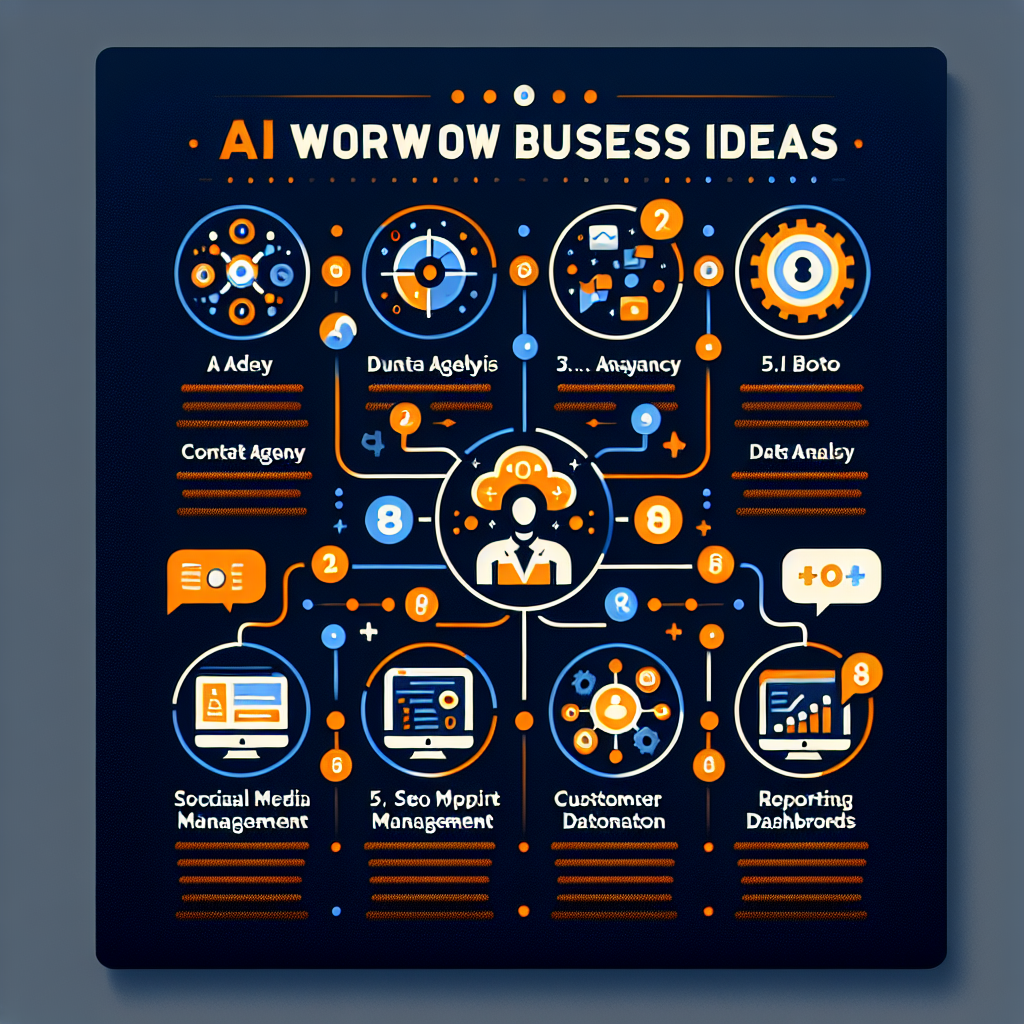
- 10 Profitable AI Workflow Business Ideas
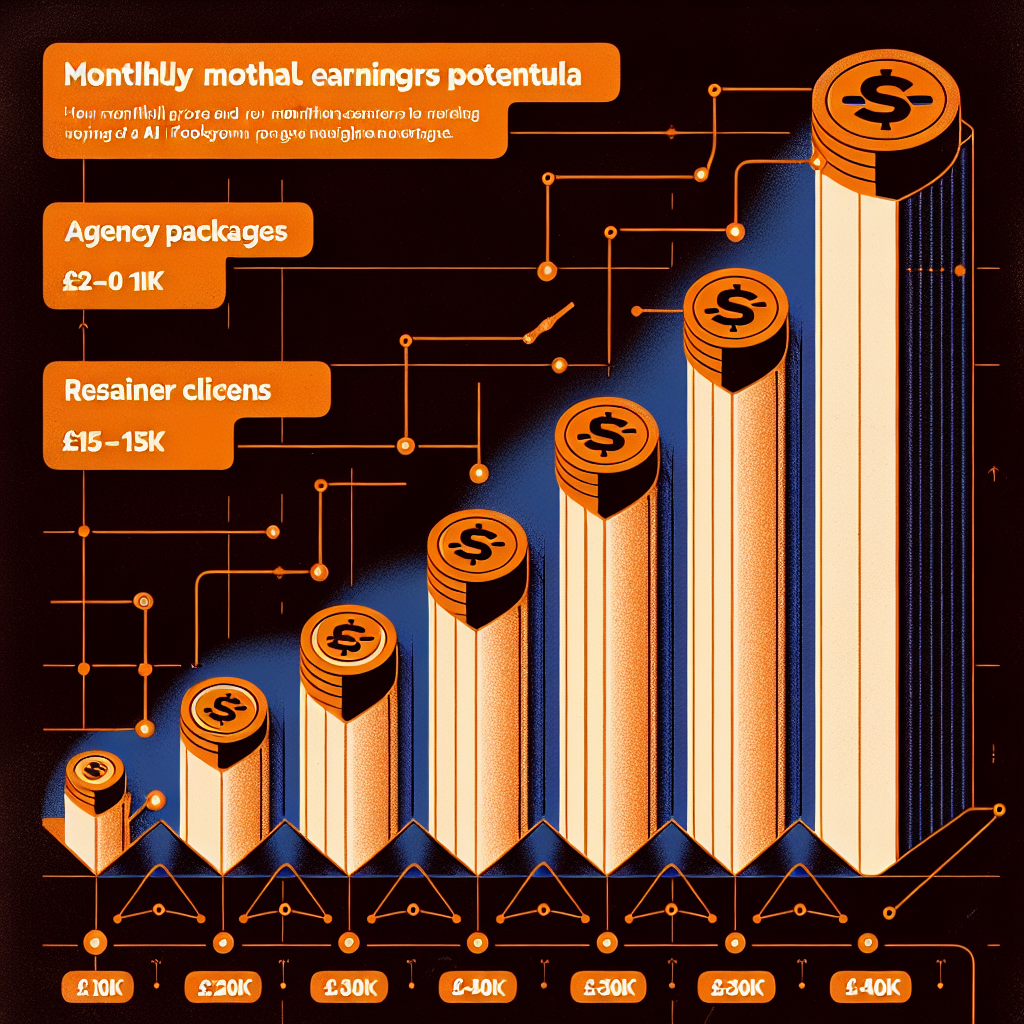
- How Much Can You Earn?
- Tools You Need to Start
- How to Get Your First Client
- FAQ
- Conclusion
What Are AI Workflows?

An AI workflow is an automated system that combines AI tools, APIs, and no-code platforms to handle business processes with minimal human intervention. Rather than hiring an employee to manually process customer emails, upload data, or format reports, an AI workflow does it instantly—24/7, with zero mistakes.
Common elements of AI workflows:
- Large language models (GPT-5, Claude, Gemini) for content and decision-making
- No-code automation platforms (Make, n8n, Zapier) to connect tools
- API integrations linking CRM systems, databases, and email platforms
- AI-powered data analysis and pattern recognition
- Chatbots and virtual assistants handling customer interactions
The key advantage: these workflows solve specific, measurable business outcomes. A chatbot that handles 60% of customer support inquiries doesn’t just impress—it saves your client £15,000–£30,000 per year in labour costs.
Why AI Workflows Are a Business Opportunity in 2026
Three factors make 2026 the perfect time to launch an AI workflow business:
1. Desperate Demand from SMBs
Small and medium-sized businesses (SMBs) have budgets to automate but lack the in-house technical expertise. They’re losing thousands of pounds monthly to manual processes—and they know it.
2. Lower Barriers to Entry
Five years ago, building automation required hiring expensive engineers. Today, platforms like Make and n8n let you wire together complex workflows using drag-and-drop logic. No coding required.
3. High Profit Margins
Once you’ve built a workflow, you can deliver it to 10, 50, or 100+ clients with minimal incremental cost. That’s leverage. Service businesses typically operate at 30–35% net profit. AI workflow agencies often hit 50%+.
10 Profitable AI Workflow Business Ideas

1. AI Content Production Agency
The Idea: Produce high-quality blog posts, social media content, email campaigns, and video scripts for small agencies, coaches, and e-commerce brands using GPT-5 and Claude.
How It Works:
- Clients provide their brand voice, product details, and target audience
- You use AI to generate first drafts (usually 30–50% of the final content)
- You edit, fact-check, and optimise for SEO
- Content is delivered within 48 hours
Revenue Model:
- Per-article: £200–£400
- Monthly retainer: £1,500–£5,000 (for 8–16 pieces per month)
- Larger agencies might charge £5,000–£15,000/month for full content operations
Earnings Potential: £2,500–£8,000/month as a solo operator; £15,000–£40,000+/month as an agency with a team.
Why It Works: Content is expensive and endless. Businesses need it constantly. AI tools handle the heavy lifting; your expertise adds the final 20% that makes it worth paying for.
2. AI-Powered Lead Generation Service
The Idea: Build AI workflows that automatically identify, qualify, and nurture sales leads for B2B companies, financial services, and real estate agents.
How It Works:
- Use AI to scrape and analyse prospect data from LinkedIn, company databases, and industry lists
- Automatically send personalised outreach emails (powered by GPT-5)
- Qualify leads based on pre-set criteria (company size, industry, budget signals)
- Feed qualified leads into the client’s CRM with complete background data
Revenue Model:
- Per-qualified lead: £10–£50 (depending on industry)
- Monthly retainer: £2,000–£6,000 (guaranteed 20–50 leads/month)
- Commission-based (10–20% of deal value for high-ticket sales)
Earnings Potential: £3,000–£12,000/month per client; agencies often manage 5–10 clients simultaneously.
Why It Works: Sales teams spend 40% of their time on lead research and initial outreach. Automating this is worth a fortune to them.
3. AI Email Marketing Automation Service
The Idea: Design and manage complete email marketing workflows that segment audiences, personalise messages, and automate follow-up sequences using AI.
How It Works:
- Create AI-powered segmentation (using customer behaviour data)
- Generate personalised email copy for each segment
- Set up automated workflows in platforms like Klaviyo or ConvertKit
- Monitor performance and optimise send times and subject lines with AI analysis
Revenue Model:
- Per client monthly retainer: £1,500–£4,000
- Performance-based (percentage of revenue lift from improved email performance)
- Setup fee (£2,000–£5,000) plus monthly management
Earnings Potential: £2,500–£8,000/month managing 5–10 clients.
Why It Works: Email remains the highest-ROI marketing channel. Most SMBs waste money sending generic emails. Personalised, AI-powered sequences convert 2–3x better.
4. AI SEO and Content Optimisation Consulting
The Idea: Use AI to audit websites, identify content gaps, optimise existing pages for search, and build SEO strategies for clients.
How It Works:
- Analyse client website against competitors using AI tools
- Identify high-opportunity keywords with search volume and low competition
- Generate and optimise blog content specifically for these keywords
- Implement schema markup and technical SEO improvements
- Monthly reporting on traffic, rankings, and ROI
Revenue Model:
- Monthly retainer: £2,000–£6,000
- Project-based (complete SEO audit + 12-month strategy): £5,000–£15,000
- Percentage of traffic growth (10% of incremental revenue generated)
Earnings Potential: £3,000–£10,000/month; can scale to £30,000+/month with 10+ clients.
Why It Works: Every business wants more organic traffic. AI makes SEO consulting faster and more accurate, allowing you to serve more clients at higher margins.
5. AI Chatbot Development and Setup Service
The Idea: Build custom AI chatbots for customer support, lead qualification, and sales assistance on client websites and messaging platforms.
How It Works:
- Analyse client business processes and customer questions
- Build chatbot logic using platforms like Intercom, Drift, or Voiceflow
- Train the bot on company documentation and FAQs
- Integrate with CRM, helpdesk, and payment systems
- Monitor performance and refine responses monthly
Revenue Model:
- Setup fee: £3,000–£8,000
- Monthly management: £500–£2,000 per chatbot
- Performance-based: commission on chats qualified or converted
Earnings Potential: £2,000–£6,000/month per client; agencies with 10+ bots easily hit £50,000+/month.
Why It Works: Customer support is labour-intensive and expensive. A well-built chatbot handles 40–60% of inquiries automatically, saving clients thousands monthly.
6. AI Data Analysis and Reporting Service
The Idea: Transform raw business data (sales, marketing, operations) into automated insights and dashboards that drive decisions.
How It Works:
- Connect to client databases, CRMs, and analytics platforms
- Build automated reports using AI analysis
- Create visual dashboards that update in real-time
- Provide monthly business intelligence insights (predictions, trends, anomalies)
Revenue Model:
- Monthly retainer: £2,000–£5,000
- Per-dashboard setup: £1,500–£4,000 (plus monthly management at £300–£800)
- Consulting on data strategy: £150–£300/hour
Earnings Potential: £3,000–£10,000/month per client.
Why It Works: Most businesses drown in data but don’t have the expertise to extract actionable insights. Automated AI analysis is 10x faster and cheaper than hiring a data analyst.
7. AI Video Production Service
The Idea: Create professional marketing videos, tutorials, and sales content using AI video generators like Runway and HeyGen.
How It Works:
- Script video content (client provides brief or you write)
- Generate video using AI tools with custom avatars and voiceovers
- Edit and add branding, graphics, and music
- Deliver in formats optimised for YouTube, TikTok, LinkedIn, etc.
Revenue Model:
- Per video: £500–£2,000 (depending on complexity)
- Monthly retainer: £3,000–£8,000 (for 4–8 videos/month)
- Agencies can charge £10,000–£50,000/month for video libraries
Earnings Potential: £2,000–£10,000/month as a solo operator; agencies hit £30,000+/month.
Why It Works: Video content converts 10x better than text. But producing video is expensive and slow. AI tools reduce production time by 70%, making video accessible to SMBs.
8. AI Social Media Management
The Idea: Manage complete social media operations—content creation, scheduling, community management, and analytics—for small businesses and personal brands.
How It Works:
- Generate daily/weekly content ideas using AI and client goals
- Create images and captions using AI tools (DALL-E, Midjourney, Claude)
- Schedule posts across platforms using Buffer or Later
- Monitor comments and respond using AI-assisted replies
- Monthly analytics and strategy adjustments
Revenue Model:
- Monthly management: £800–£3,000 per client (depending on platforms and posting frequency)
- Performance-based: percentage of audience growth or engagement lift
Earnings Potential: £2,000–£6,000/month managing 5–8 clients.
Why It Works: Consistent social media presence drives brand awareness and sales, but most SMBs lack time or expertise. Outsourcing this is a no-brainer, especially if you use AI to scale.
9. AI Customer Support Automation
The Idea: Build comprehensive customer support systems that handle inquiries across email, chat, phone, and social media automatically.
How It Works:
- Map customer support workflows and common questions
- Build AI agents that can answer questions, process refunds, and escalate issues
- Integrate with ticketing systems and knowledge bases
- Train the system on company policies and documentation
- Handle overflow during peak times
Revenue Model:
- Monthly retainer: £2,500–£8,000 per client
- Per-ticket: £0.50–£2.00 (if scaling across many clients)
- Markup on API usage and tool subscriptions
Earnings Potential: £5,000–£15,000/month managing customer support for 3–5 SMBs.
Why It Works: Customer support is one of the largest expenses for e-commerce and SaaS businesses. Automation reduces costs by 50–70% while improving response times.
10. AI Workflow Consulting for SMBs
The Idea: Consult with small and medium-sized businesses to identify, design, and implement AI workflows tailored to their specific operations.
How It Works:
- Conduct discovery calls and process audits
- Identify top 3–5 automation opportunities
- Design custom workflows using Make, n8n, or Zapier
- Implement and train internal teams
- Ongoing optimisation and scaling
Revenue Model:
- Consulting rate: £150–£350/hour (discovery and strategy)
- Project fees: £5,000–£30,000 (design and implementation)
- Retainer for ongoing optimisation: £1,000–£4,000/month
Earnings Potential: £4,000–£15,000/month as a consultant; agencies scale to £100,000+/month.
Why It Works: Most businesses don’t know where to start with automation. Expert guidance that delivers measurable ROI is highly valued.
How Much Can You Earn?
Here’s realistic income progression for different business models:
Month 1–3 (Launch Phase)
- Focus on 1–2 service offerings
- Target: 1–2 paying clients
- Expected revenue: £1,500–£5,000/month
Month 4–6 (Scaling Phase)
- Refine your offerings based on first clients
- Build case studies and testimonials
- Target: 3–5 clients
- Expected revenue: £5,000–£15,000/month
Month 7–12 (Growth Phase)
- Combine multiple service offerings
- Build a basic sales and marketing system
- Target: 5–10 clients
- Expected revenue: £10,000–£30,000/month
Year 2+ (Mature Phase)
- Build a productised service or agency
- Hire contractors or team members
- Target: 15–50+ clients
- Expected revenue: £30,000–£100,000+/month
Key insight: Your earnings depend on:
1. Service pricing (£500 projects vs. £10,000 retainers)
2. Number of clients (1 client at £5,000/month vs. 10 at £2,000/month)
3. Time efficiency (how many clients you can manage solo)
4. Business model (service, productised, or agency)
Most successful AI workflow entrepreneurs hit £5,000–£10,000/month within 6 months if they focus, execute well, and prioritise revenue-generating activities.
Tools You Need to Start
Automation Platforms (Essential)
- Make (formerly Integromat): Visual workflow builder for complex automation
- n8n: Open-source alternative with more control
- Zapier: Simple automations connecting popular apps
AI Models
- GPT-5: Advanced reasoning, content generation
- Claude: Excellent for complex analysis and workflows
- Gemini: Multimodal understanding and analysis
Content and Copy Generation
- Jasper: Brand voice consistency for long-form content
- Copy.ai: Quick copy generation for ads and emails
- Runway: AI video generation
Chatbot and Support Platforms
- Intercom: Customer communication and support automation
- Drift: Sales conversations and lead qualification
- Voiceflow: Custom chatbot building
Analytics and Data
- Looker Studio: Free dashboards and reporting
- Metabase: Business intelligence and data exploration
- Airtable: Visual database with automations
Essential Subscriptions (Estimated)
- Automation platforms: £50–£200/month
- AI API usage: £100–£500/month (dependent on volume)
- Chatbot/support tools: £100–£500/month
- Additional tools: £100–£300/month
- Total starter budget: £350–£1,500/month
The good news: these costs are deductible as business expenses, and you pass most costs to clients through retainers or markup.
How to Get Your First Client
1. Start with Your Network
Talk to people you already know. Former colleagues, friends who own businesses, and acquaintances often have problems you can solve. Offer a discounted “pilot project” (£1,000–£3,000) to build a case study.
2. Target Specific Industries
Rather than saying “I do automation,” say “I help e-commerce brands automate customer support and save £20,000/year.” Specificity attracts clients.
3. Build Proof with Case Studies
Your first client is the hardest. After that, case studies are your best sales tool. Document results: “Reduced support response time from 8 hours to 2 minutes” or “Generated 150 qualified leads per month.”
4. Use Outbound Messaging
LinkedIn and email outreach work. Message business owners and founders directly with specific ideas about how you’d automate their business. Example: “I noticed [Company] spends hours manually processing customer refunds each week. I’ve built a workflow that does this automatically—I thought you might be interested.”
5. Join Communities and Communities
Participate in Slack groups, Facebook groups, and forums where your ideal clients hang out. Add genuine value first. Selling comes later.
6. Launch a Simple Website
A one-page website with 2–3 case studies and clear service descriptions converts. You don’t need a complex site—focus on results.
7. Offer Free Consultations
A 30-minute free discovery call lets you qualify leads and demonstrate expertise. Many of these convert to projects.
Frequently Asked Questions

Q: Do I need to know how to code?
No. Platforms like Make and Zapier are designed for non-technical users. You’ll learn “workflow logic” naturally as you build.
Q: How quickly can I start earning?
Some people earn money within 30 days by implementing a quick chatbot or email automation. Realistic: £2,000–£5,000 within 60 days if you actively pursue clients.
Q: What’s the typical client contract length?
Most AI workflow services operate on monthly retainers (3–12 months) or project-based fees. Long-term retainers are ideal because they provide recurring revenue.
Q: How do I compete if other people are doing this?
Specialise. Don’t compete on price—compete on results. “I help SaaS founders automate customer onboarding” beats “I do AI automation for anyone.”
Q: What’s a realistic profit margin?
For service-based AI workflow businesses, 40–60% net profit is typical. For agencies, 30–50% is standard (after accounting for team salaries and overhead).
Q: Can I really do this part-time?
Yes, but it requires discipline. Most successful part-time AI workflow businesses dedicate 15–20 hours per week and hit £2,000–£4,000/month within 6 months.
Conclusion
AI workflows represent one of the most accessible and profitable business opportunities in 2026. You don’t need to build proprietary AI models or raise venture capital. You don’t need a technical background or MBA. You just need to solve real problems for businesses desperate to automate.
The market is enormous. Thousands of SMBs are losing thousands of pounds to manual processes every month. A single workflow could save them that cost. If you can deliver results, you’ll build a profitable, scalable business.
Next steps:
1. Choose one service from the 10 ideas above
2. Learn the required tools (expect 2–4 weeks)
3. Build your first workflow as a case study
4. Reach out to 20 potential clients this week
5. Close your first paying project within 60 days
Learn more about AI business strategy and practical implementation at learnAI.
Word Count: 3,087 words