AI Marketing Basics: Complete Beginner’s Guide 2026
Introduction
Artificial intelligence has fundamentally transformed how modern businesses connect with their customers. The marketing landscape in 2026 is no longer about traditional interruption tactics—it’s about intelligent integration, personalised experiences at scale, and marketing workflows that work smarter, not harder. Whether you’re a small business owner, a freelancer, or someone just starting your marketing journey, understanding AI marketing basics is no longer optional. It’s essential for staying competitive. (See also: Best AI Business Tools: The Complete Guide for 2026) (See also: Free AI Business Tools: The Complete Guide for 2026).
The statistics speak for themselves. Worldwide adoption of artificial intelligence has skyrocketed to 76% across all industries, with 88% of marketing professionals now using AI tools daily. Yet many beginners feel overwhelmed by the technical jargon and complexity. This guide breaks down AI marketing into practical, actionable steps you can implement today—without needing a computer science degree.
By the end of this article, you’ll understand what AI marketing truly is, how it changes customer relationships, which techniques deliver real results, and exactly how to start using AI in your marketing campaigns right now.
Table of Contents
- What Is AI Marketing?
- How AI Changes Marketing Strategy
- Core AI Marketing Techniques Explained
- Top AI Marketing Tools for Beginners
- Getting Started with AI Marketing: A Step-by-Step Guide
- Common AI Marketing Mistakes to Avoid
- Frequently Asked Questions
- Conclusion
What Is AI Marketing?
At its core, AI marketing is the application of artificial intelligence—machine learning, natural language processing, and predictive algorithms—to solve real marketing problems. Instead of manually analysing thousands of customer data points or manually crafting individual customer communications, AI handles these tasks automatically, learning and improving with every interaction.
Think of it this way: AI marketing is “predict, personalise, automate, convert.” It’s about using data and intelligent systems to predict what customers want, personalise their experience at scale, automate repetitive tasks, and ultimately drive conversions and loyalty.
The key difference from traditional marketing: Traditional marketing relies on intuition, manual analysis, and one-size-fits-all approaches. AI marketing relies on data-driven insights, continuous learning, and hyper-personalised experiences tailored to individual customer segments.
In 2026, leading companies aren’t just using AI as a tool—they’re building AI-native marketing strategies where artificial intelligence is embedded into every decision-making layer.
How AI Changes Marketing Strategy
The shift to AI marketing isn’t simply a matter of adding new tools to your toolkit. It fundamentally changes how marketing teams operate, think, and deliver value.
Personalisation at Scale
Historically, true one-to-one personalisation was impossible. You could segment audiences into broad groups, but treating each customer as an individual was simply too labour-intensive. AI changes this equation entirely.
Modern AI systems can create synthetic customer personas by combining real transaction data with predictive models. These aren’t static profiles—they’re living, breathing digital models of your customers that update constantly. A marketing platform can now deliver unique experiences to millions of customers simultaneously, with each interaction tailored to individual preferences, behaviour, purchase history, and predicted future needs.
Consider a practical example: A customer browsing winter products on your website receives different product recommendations, email subject lines, and promotional offers than someone browsing summer items—all determined in real-time by AI systems. More impressively, the same customer receives different recommendations depending on whether they typically respond better to urgency-driven messaging (“Only 2 left in stock!”) or value-driven messaging (“Save 30% this week”). This level of personalisation happens automatically across your entire customer base without manual configuration.
Retailers using AI personalisation report measurable improvements in customer experience and revenue. Customers feel understood because the marketing resonates with their actual needs and preferences. This creates stronger emotional connections and increases lifetime customer value significantly.
Marketing Automation That Thinks
Traditional marketing automation follows rigid rules: “If customer clicks email, then send follow-up message.” AI-powered automation is far more intelligent and adaptive.
AI agents can now manage entire campaign workflows with minimal human intervention. They optimise email send times based on individual recipient behaviour patterns. They adjust ad creative in real-time based on performance data. They identify customers at risk of churning and automatically deploy retention campaigns with personalised incentives.
Here’s what intelligent automation actually looks like in practice: An AI system monitors customer engagement patterns continuously. When it detects that a customer hasn’t engaged with your brand for 30 days, it doesn’t send a generic “we miss you” email. Instead, it analyses that specific customer’s purchase history, identifies which product category they engaged most deeply with in the past, and sends a personalised offer on that specific product type. If they still don’t engage after another week, it escalates to a different offer type. All of this happens automatically without a marketer manually designing each scenario.
The human element doesn’t disappear—it shifts. Instead of executing repetitive tasks, marketing professionals focus on strategy, creativity, and human insight. AI handles the execution and optimisation. This transformation makes marketing jobs more strategic and valuable, not less.
Advanced Analytics and Insights
Understanding customer behaviour has never been easier. Where traditional analytics might tell you “email open rates increased by 15% this month,” AI analytics explain why opens increased, which customer segments responded most positively, and which changes will drive future performance improvements.
Predictive analytics go further, forecasting which leads are most likely to convert, which customers are at highest churn risk, and which products each customer is most likely to purchase.
Core AI Marketing Techniques Explained
Successful AI marketing relies on several proven techniques. Understanding each one helps you identify where to start in your own organisation.
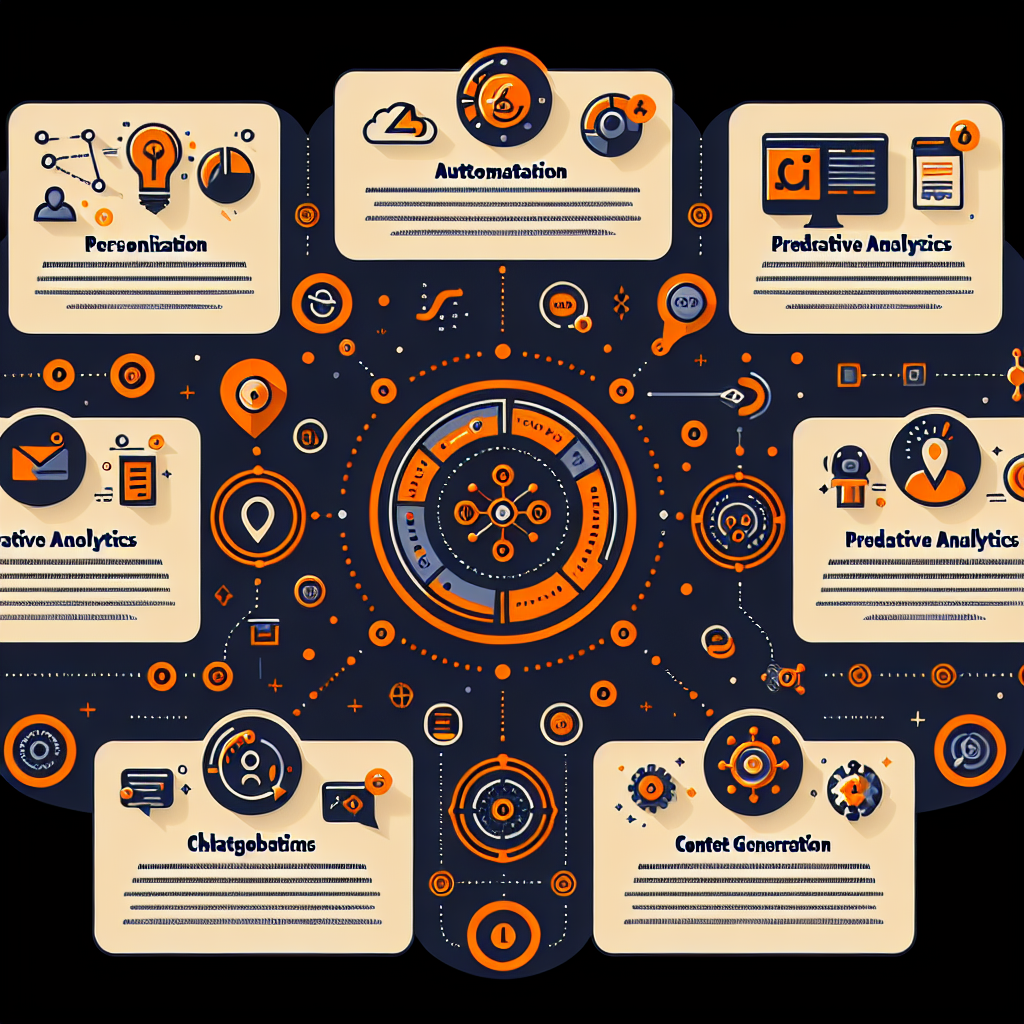
1. Customer Segmentation and Micro-Targeting
Segmentation is the process of dividing your audience into distinct groups based on shared characteristics. Traditional segmentation might create five to ten broad segments based on demographics or geography.
AI-powered segmentation creates hundreds or thousands of micro-segments based on behaviour patterns, purchase history, engagement level, seasonal trends, and predicted preferences. A single micro-segment might be “women aged 25-34 in London who purchased athletic wear in the past three months and frequently open emails between 6-8 PM.”
This enables hyper-targeted campaigns that feel remarkably relevant to each recipient.
2. Predictive Analytics
Predictive analytics uses historical data to forecast future outcomes. In marketing, this means:
- Lead Scoring: Which prospects are most likely to become paying customers?
- Churn Prediction: Which existing customers might cancel their subscription or stop buying?
- Lifetime Value Estimation: Which new customers will generate the most revenue over time?
- Next Purchase Prediction: What will each customer likely buy next, and when?
Teams using predictive analytics focus sales efforts on high-probability leads, implement retention campaigns before customer churn happens, and optimise marketing spend toward highest-value customer acquisition.
3. Intelligent Chatbots and Conversational AI
Chatbots powered by large language models like GPT-5 go far beyond simple “frequently asked questions” responses. Modern conversational AI can:
- Answer complex customer questions in natural, human-like language
- Qualify leads by understanding their needs and challenges
- Make personalised product recommendations during conversations
- Handle customer service issues without human intervention
- Collect customer feedback and preferences for future personalisation
A customer visiting your website at 2 AM doesn’t need to wait until morning—an intelligent chatbot provides immediate assistance.
4. Content Generation and Optimisation
AI content tools now generate initial drafts of blog posts, social media updates, email copy, product descriptions, and ad headlines. The quality has improved dramatically. What once produced mediocre output now generates content competitive with professional copywriters.
Key applications include:
- Generating multiple subject line variations and testing which performs best
- Creating social media content at scale while maintaining brand voice
- Drafting email newsletters personalised for different customer segments
- Optimising existing content for search engines
- Repurposing a single long-form article into dozens of social posts
Critical point: AI-generated content still requires human review and editing. AI excels at speed and ideation but can miss brand nuances, factual accuracy, and emotional resonance that human oversight provides.
5. Dynamic Pricing and Offer Optimisation
AI systems analyse supply, demand, competitor pricing, customer willingness to pay, and inventory levels to recommend optimal prices and promotional offers in real-time.
An e-commerce business might use AI to dynamically adjust product prices based on demand levels. During high-demand periods, prices increase slightly. During slower periods, strategic discounts drive volume. Email campaigns show different offer amounts to different customer segments based on their predicted price sensitivity.
Top AI Marketing Tools for Beginners

You don’t need a massive budget or technical expertise to get started with AI marketing. Several excellent tools are specifically designed for beginners and small businesses. Here’s what makes each valuable for different marketing scenarios.
HubSpot with AI Features
HubSpot’s platform now includes AI-powered lead scoring, predictive analytics, and content suggestions. The free tier lets you test basic AI features before committing to paid plans. Particularly valuable is the AI Email Assistant for drafting customer messages. HubSpot’s strength lies in its integration capabilities—your AI-powered insights live in the same platform where you manage customer relationships, making action on those insights seamless.
Canva AI
If visual content is your bottleneck, Canva’s AI features let you generate branded graphics, social media templates, and visual assets in minutes. The interface is intuitive even for non-designers. What makes Canva particularly powerful is its brand kit feature, which ensures all generated visuals maintain consistent branding. You can generate dozens of social media variations in the time it previously took to create one graphic.
OpenAI’s GPT-5
While not a dedicated marketing tool, GPT-5 is an extraordinarily powerful general-purpose AI that excels at content drafting, copywriting, brainstorming, and analysis. Many beginner marketers start here because it’s accessible and affordable. GPT-5’s versatility means it adapts to your specific tone, style, and requirements with detailed prompting. From brainstorming campaign angles to refining email copy, it handles diverse marketing tasks.
Jasper
Jasper is specifically built for marketing content creation. It understands marketing frameworks like AIDA (Attention, Interest, Desire, Action) and can generate everything from blog posts to ad copy to social media captions. Jasper’s templates and marketing-specific commands accelerate content creation compared to general-purpose AI tools.
Mailchimp with AI
Mailchimp’s email marketing platform now includes AI-powered send-time optimisation, subject line recommendations, and content suggestions. It integrates well with small business workflows. Its particular strength is sending emails exactly when individual recipients are most likely to open them, improving open rates and engagement metrics across your subscriber base.
Getting Started with AI Marketing: A Step-by-Step Guide
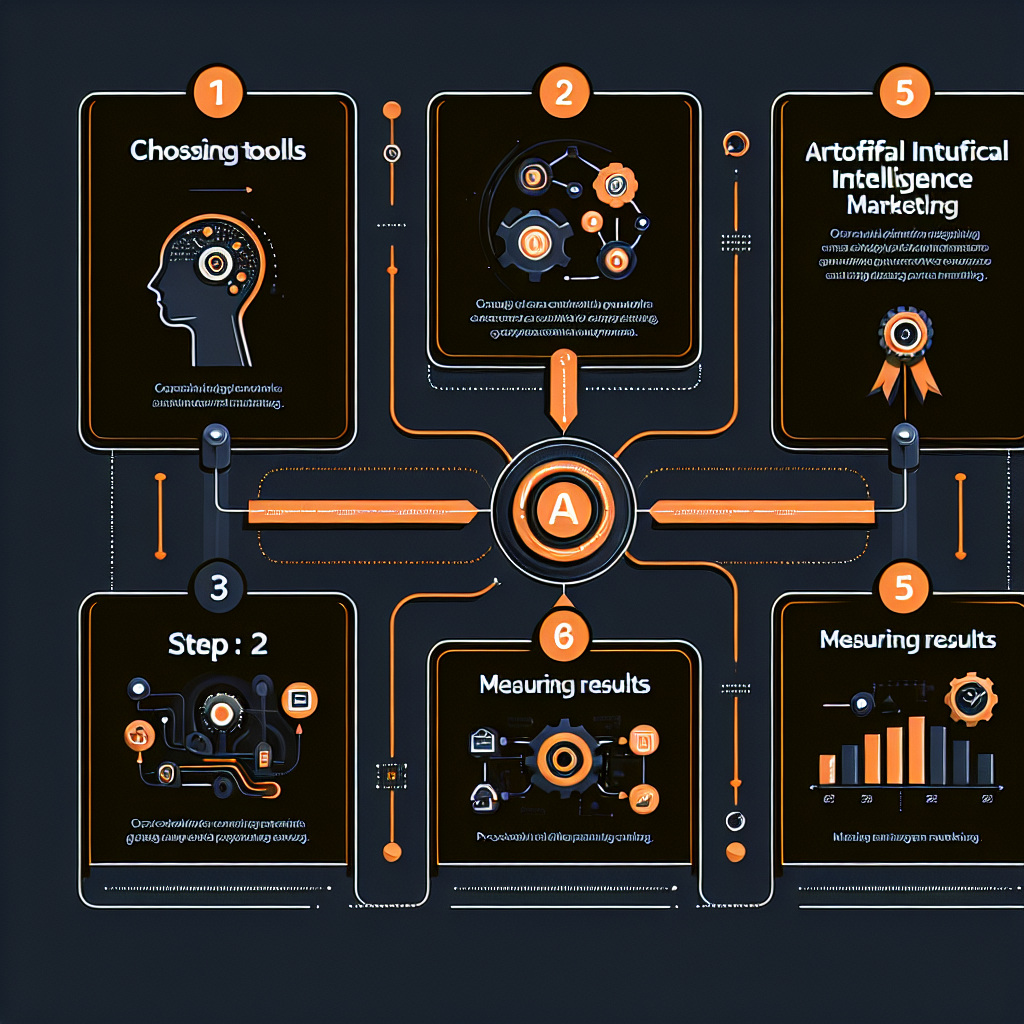
Ready to implement AI marketing in your business? Here’s a practical roadmap. The most successful implementations follow a methodical approach rather than rushing to adopt every tool simultaneously.
Step 1: Audit Your Current Marketing
Before adopting new tools, understand your starting point. Document:
- What marketing tasks consume the most time? (Hint: repetitive tasks are prime candidates for AI)
- Where do you have the most customer data? (This is your foundation for AI)
- Which marketing channels drive highest ROI? (Focus AI efforts here first)
- What specific problems are you solving? (Don’t implement AI for its own sake)
- Which team members have capacity to manage AI tools? (Change management is crucial)
This audit reveals your best starting point for AI implementation. For example, if your team spends 20 hours per week drafting email variations, an AI content tool would deliver immediate ROI. If your biggest challenge is identifying high-value leads among thousands of prospects, predictive analytics becomes your priority.
Step 2: Choose Your First AI Use Case
Don’t try to implement everything at once. Pick one specific problem where AI will create immediate value. Common first projects include:
- Email marketing: Use AI to optimise send times and subject lines
- Content creation: Use AI to draft social media content or blog post outlines
- Lead scoring: Use AI to prioritise which prospects your sales team contacts
- Customer service: Deploy a chatbot to handle common questions
A successful first project builds confidence and demonstrates ROI for future investments.
Step 3: Select Appropriate Tools
Based on your chosen use case, research and test tools specifically built for that problem. Most platforms offer free trials. Spend time with each tool—take their tutorials, watch demo videos, connect sample data.
Look for tools with strong customer support, active communities, and clear documentation. The best tool is one your team will actually use.
Step 4: Prepare Your Data
AI learns from data. The better quality your data, the better results you’ll achieve. This means:
- Cleaning inconsistent or duplicate customer records (dirty data produces misleading AI insights)
- Ensuring you’re capturing relevant customer information consistently
- Connecting your email, CRM, and analytics platforms so data flows automatically
- Creating a single source of truth for customer data (no more conflicting numbers)
- Establishing data governance practices so quality remains consistent over time
This step often takes longer than people expect but pays enormous dividends. Quality data makes the difference between AI that delivers genuine business value and AI that produces interesting-but-useless outputs. Many organisations skip or rush this step and regret it when AI models produce poor results from poor-quality input data.
Step 5: Start Small and Measure
Launch your AI initiative with a limited group or time period. Generate a report comparing performance before and after implementation. Which metrics improved? By how much? What unexpected learnings emerged?
Use these results to refine your approach and justify additional investment.
Step 6: Scale and Expand
Once your first project proves successful, identify the next highest-priority problem to address with AI. You’re now building institutional knowledge about how AI works in your specific business context.
Common AI Marketing Mistakes to Avoid
Learning from others’ mistakes accelerates your progress. Watch out for these common pitfalls that trip up many organisations implementing AI marketing.
Blindly Trusting AI Output
AI is powerful but imperfect. Generated content can contain factual errors, brand-voice inconsistencies, outdated information, or statements that contradict your actual policies. Always review AI output before publishing. This human-in-the-loop approach catches problems while preserving the speed advantage of AI. Set internal review standards and ensure your team understands that AI is a tool to enhance, not replace, human judgment.
Ignoring Data Privacy and Compliance
Using customer data for personalisation means handling sensitive information responsibly. Understand regulations like GDPR, CCPA, and regional privacy laws. Ensure your AI tools are compliant and your data handling practices protect customer privacy. Failure here carries significant legal and reputational risks. Customers increasingly expect companies to handle their data ethically—transparency builds trust.
Implementing Before Understanding Your Data
Garbage in, garbage out. If your customer data is messy or incomplete, AI results will reflect that. Invest in data quality before expecting magic from AI. This is perhaps the most common mistake: organisations want to “go fast” and skip data preparation, then wonder why their AI initiatives underdeliver.
Forgetting the Human Element
The most successful AI marketing maintains human judgment, creativity, and empathy. Don’t become entirely dependent on algorithmic decision-making. Your brand voice, customer relationships, and strategic vision can’t be automated—they must be preserved. AI works best when it amplifies human insight rather than replacing it.
Overwhelming Your Team
Change fatigue is real. Introducing too many new AI tools simultaneously overwhelms your team and dilutes focus. Implement systematically, with clear training and support. Your team’s adoption rate matters more than having every possible tool installed. Start with one tool, get your team proficient, demonstrate results, then expand methodically.
Frequently Asked Questions
Q: Do I need technical skills to use AI marketing tools?
No. Most modern AI marketing tools are designed for non-technical users. You don’t need to understand machine learning algorithms—you just need to understand your marketing goals and how to use the platform’s interface.
Q: How much does AI marketing cost?
It varies enormously. Some tools offer free tiers for basic features. Others range from £50-500+ per month depending on features and usage. Many businesses find that improved marketing efficiency quickly pays for the tool investment.
Q: Will AI marketing tools replace marketing jobs?
AI automates routine tasks—email scheduling, basic copywriting, data analysis—but it doesn’t replace human creativity, strategy, and relationship-building. Most organisations see their marketing teams shift toward higher-value work rather than disappearing entirely.
Q: How long before I see results?
This depends on the use case. Email send-time optimisation might show results within weeks. Building a predictive customer model might take months. Start with projects that deliver results quickly to build momentum.
Q: Is AI marketing only for large companies?
Absolutely not. Small businesses often benefit more from AI because they face greater resource constraints. AI lets a two-person marketing team accomplish what previously required a much larger team.
Q: What about AI-generated content quality?
AI content generation has improved dramatically. Most AI-generated content now requires light editing rather than complete rewrites. The key is using AI as a starting point, not as a finished product.
Conclusion

AI marketing is no longer a future possibility—it’s happening now, in 2026. Organisations across every industry are using artificial intelligence to personalise customer experiences, automate marketing workflows, and make data-driven decisions with unprecedented accuracy.
The good news? You don’t need to be a technology expert or a large corporation to benefit. By understanding the fundamentals covered in this guide—what AI marketing is, how it changes strategy, and which techniques deliver results—you have everything needed to implement AI marketing in your business.
Start with one specific use case where AI solves a genuine problem in your marketing. Choose tools built for beginners. Prepare your data. Measure results. Learn what works in your unique context.
The future of marketing is intelligent, personalised, and automated. But it’s also fundamentally human—requiring strategy, creativity, and judgment that no algorithm can replicate. Your opportunity lies in mastering the combination.
Ready to build your AI-native marketing strategy? Start today with one small step. Your future customers—and your competitive advantage—depend on it.
Want to deepen your AI knowledge? Explore more beginner-friendly guides and actionable AI learning resources at learnai.sk.