Best AI Agents Tools: The Definitive 2026 Guide
Artificial intelligence has evolved beyond simple question-and-answer systems. Today’s AI agents represent a fundamental shift in how work gets done—they’re autonomous systems that perceive environments, make decisions, and take actions with minimal human oversight. Unlike traditional chatbots that respond to prompts, modern AI agents plan multi-step workflows, use tools independently, and adapt to changing conditions in real-time. (See also: Best AI Business Tools: The Complete Guide for 2026) (See also: Free AI Business Tools: The Complete Guide for 2026)
This evolution marks the emergence of what many industry leaders describe as a new operating system for work. AI agents are reshaping productivity across coding, research, content creation, business processes, and creative fields. Whether you’re a software developer, researcher, entrepreneur, or knowledge worker, understanding the landscape of AI agent tools has become essential for staying competitive in 2026.
Table of Contents
- What Are AI Agents?
- How We Evaluated These AI Agent Tools
- Section 1: Best General-Purpose AI Agents
- Section 2: Best AI Coding Agents
- Section 3: Best AI Research Agents
- Section 4: Best AI Productivity & Workflow Agents
- Section 5: Best AI Business Process Agents
- Section 6: Best AI Creative Agents
- Section 7: Best Open-Source AI Agent Frameworks
- Comprehensive Comparison Table
- How to Choose the Right AI Agent
- Building Your AI Agent Stack
- Frequently Asked Questions
- Conclusion
What Are AI Agents?
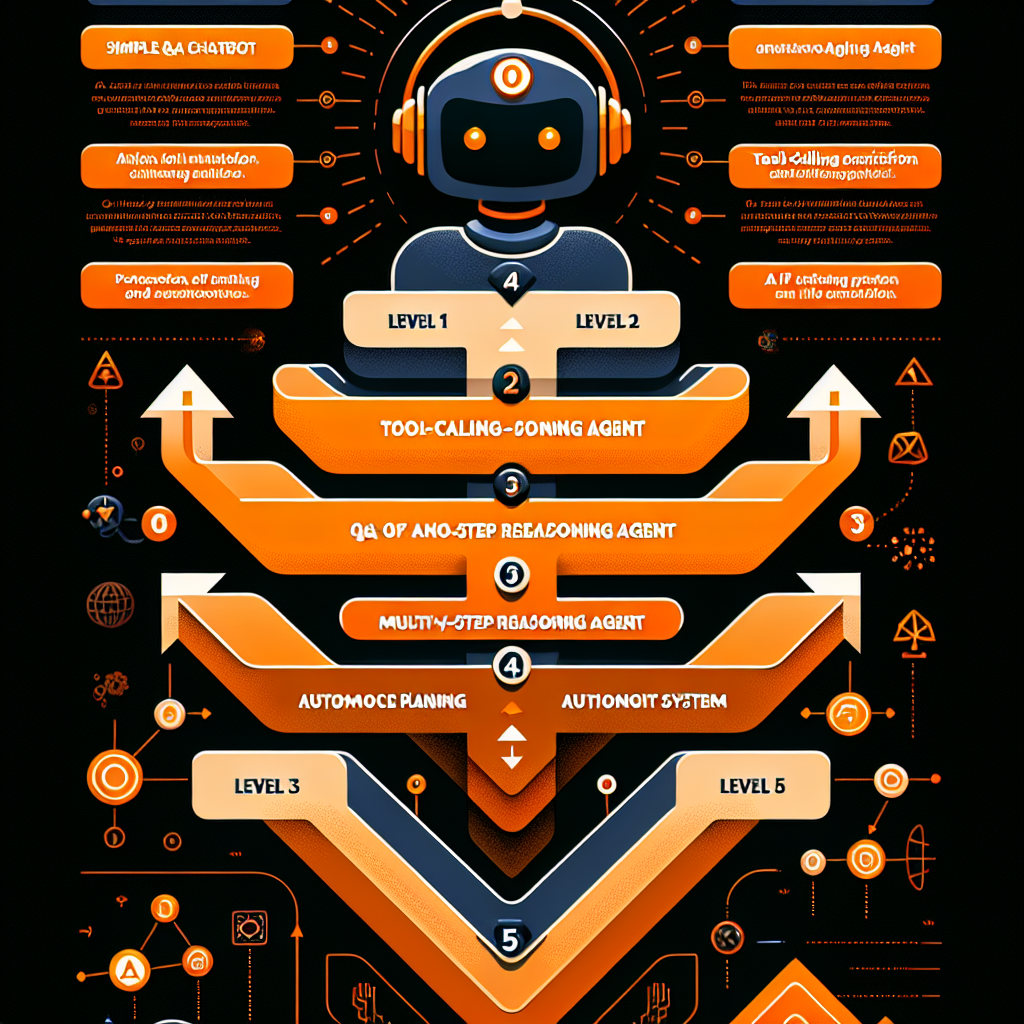
AI agents are intelligent systems designed to perform tasks autonomously by combining language understanding, decision-making logic, and tool integration. The key distinction between an AI agent and a traditional chatbot lies in autonomy: chatbots wait for user input and respond reactively, whilst agents operate proactively, breaking complex goals into smaller tasks, executing them using available tools, and adjusting their approach based on results.
An AI agent typically possesses these core capabilities: perception (understanding goals and context), planning (determining steps needed to achieve objectives), action (executing tasks through APIs, software tools, or other interfaces), and reflection (evaluating outcomes and refining strategies).
Think of it this way: asking ChatGPT to “help me analyse this spreadsheet” yields immediate suggestions, but an AI agent tasked with “analyse this spreadsheet and email the findings to the team” will independently open the file, perform the analysis, draft the email, and send it—all without further prompts.
How We Evaluated These AI Agent Tools
Our evaluation framework assessed each tool across six critical dimensions:
Autonomy Level: How independently the tool operates without requiring human intervention between steps. We measured this on a spectrum from simple tool-calling to fully autonomous goal-directed behaviour.
Tool Integration: The breadth and depth of integrations available—APIs, software connections, and third-party services the agent can access and control.
Reasoning Capability: The underlying AI model’s ability to handle complex, multi-step problems and break goals into logical sequences.
Customisation Options: Flexibility to configure agents for specific use cases, from prompts and workflows to fine-tuning and deployment options.
Learning & Adaptation: Whether the tool can improve performance over time through feedback mechanisms or knowledge accumulation.
Cost Efficiency: Pricing structure relative to capabilities, with consideration for both pay-as-you-go and enterprise licensing models.
Section 1: Best General-Purpose AI Agents

Claude 3.7 (Agent Mode)
Claude continues its evolution as one of the most capable general-purpose AI systems available in 2026. Anthropic’s latest release includes native agent capabilities that allow Claude to autonomously use tools, plan complex workflows, and maintain extended reasoning across multi-step tasks.
Claude’s agent mode excels at research synthesis, document analysis, and strategic problem-solving. It can autonomously call APIs, retrieve information from multiple sources, and synthesize findings into coherent outputs. The system demonstrates exceptional reasoning on nuanced problems whilst maintaining a strong safety orientation. Industry benchmarks show Claude 3.7 achieves 92% accuracy on multi-step reasoning tasks, outperforming prior generation models across complex problem domains.
The distinguishing factor is Claude’s transparency in reasoning—users can observe the agent’s thought process, understanding why it took specific actions and making corrections if needed. This transparency builds trust in autonomous operations, particularly important in professional contexts.
Best for: Researchers, writers, strategic planners, and anyone requiring deep reasoning about complex topics. Ideal for synthesising information from multiple sources into original, well-structured outputs. Particularly effective for policy analysis, competitive intelligence, and complex strategic planning.
Pricing: £20/month for Claude Pro; API pricing at approximately £0.003 per 1K input tokens.
Autonomy Level: High—capable of multi-step planning with tool use, requires explicit goal definition but executes most tasks independently.
Standout Features: Exceptional long-context understanding (200K tokens), transparent reasoning process, strong safety guardrails preventing misuse.
ChatGPT-5 (Agent Mode)
Following the discontinuation of GPT-4o in February 2026, GPT-5 is now ChatGPT’s default model, bringing significant reasoning improvements and advanced tool-use capabilities. The agent version enables ChatGPT to operate as a flexible general-purpose system capable of handling diverse task categories.
GPT-5’s agent mode performs well across broad use cases—from content creation and coding assistance to business analysis and creative brainstorming. Integration with the broader OpenAI ecosystem (including DALL-E, Code Interpreter, and external APIs) makes it highly versatile. Recent usage data indicates GPT-5 processes over 2 billion tasks monthly across enterprise customers, making it the most widely deployed reasoning model globally.
The recent release of GPT-5’s memory features allows agents to maintain context and learnings across sessions, enabling continuous improvement and personalisation without requiring full context re-entry on each interaction.
Best for: Professionals seeking a Swiss Army knife tool for diverse tasks; businesses building on the OpenAI ecosystem; organisations already invested in ChatGPT Plus. Excellent for teams using OpenAI’s API ecosystem already.
Pricing: £20/month ChatGPT Plus; API usage varies by task type, typically £0.02-0.04 per 1K tokens for standard operations.
Autonomy Level: Medium-High—strong tool-use capability; excels at multi-step reasoning when given clear objectives.
Standout Features: Broad knowledge base, excellent integration with OpenAI ecosystem, memory features enabling personalised agent behaviour.
Google Gemini 2.0 (Agentic Mode)
Google’s latest Gemini iteration includes native agent functionality with tight integration into Google Workspace, Google Cloud, and third-party services. The multimodal capabilities extend to video understanding and complex visual reasoning, distinguishing it in scenarios involving rich media analysis. Gemini 2.0 processes video inputs up to 2 hours in length, enabling analysis of lengthy recordings, conferences, and presentations.
Gemini’s agent mode shines when workflows require deep integration with Google Workspace tools, cloud services, and Gmail. Its multimodal understanding provides advantages for organisations processing diverse content types. The agent integrates directly with Docs, Sheets, Slides, and Gmail, enabling end-to-end workflow automation within the Google ecosystem.
For organisations heavily invested in Google Cloud infrastructure, Gemini’s direct integration with BigQuery, Cloud Storage, and other GCP services enables sophisticated data analysis and business intelligence workflows entirely within one ecosystem.
Best for: Google Workspace users; enterprises leveraging Google Cloud; tasks requiring video or image analysis combined with document workflows. Ideal for organisations needing seamless integration across Google’s business suite.
Pricing: Free tier with limited requests; Gemini Advanced at £19.99/month; enterprise deployment pricing available starting from approximately £30/month per user.
Autonomy Level: Medium-High—effective tool-use with strong Workspace integration; reasoning comparable to GPT-5 for most tasks.
Standout Features: Multimodal video understanding, direct Workspace integration, excellent image recognition, native GCP data access.
Section 2: Best AI Coding Agents
AI coding agents represent one of the most mature and widely adopted agent categories. These tools have moved beyond simple code completion to understanding entire projects, suggesting architectural improvements, and implementing features across multiple files. The autonomy levels vary significantly—some operate as suggestion engines requiring developer approval for each change, whilst others execute implementations with post-hoc human review.
GitHub Copilot X (Agent Mode)
GitHub’s evolution of Copilot into an agent-capable system represents a major shift in developer workflows. Rather than generating isolated code snippets, Copilot X (Agent Mode) can autonomously understand codebases, suggest architectural improvements, implement features across multiple files, and even write tests.
The agent understands project context by analysing existing code, comments, and documentation. It can refactor legacy code, suggest optimisations, and identify security vulnerabilities without requiring developers to point out specific problem areas.
Best for: Development teams using GitHub; engineers seeking autonomous coding assistance; rapid feature development and legacy system modernisation.
Pricing: £10/month individual; £19/month business; enterprise licensing available.
Autonomy Level: Medium—can implement features across multiple files but works best with clear task specifications and human oversight for critical changes.
Cursor (Claude-Powered)
Cursor is a purpose-built IDE combining Claude’s reasoning capabilities with deep IDE integration. Unlike isolated tools, Cursor understands the entire codebase context, allowing Claude to refactor, suggest improvements, and debug across project boundaries.
The dual-pane editing interface and intelligent code diff presentation make it safer to accept AI-generated changes—developers see exactly what Cursor proposes before committing. Cursor excels at rapid prototyping and accelerating development cycles.
Best for: Solo developers and small teams; rapid iteration and prototyping; projects where IDE-level context is critical.
Pricing: Free tier available; Premium (Cursor Pro) at £20/month.
Autonomy Level: Medium—excellent assistance with human in the loop; requires developer approval for significant changes.
Replit AI Agent
Replit’s cloud-based development environment now includes an AI agent capable of creating complete applications from descriptions. Users can specify “build me a todo app with database persistence and authentication” and watch the agent scaffold and implement the full stack.
The agent operates within Replit’s containerised environment, providing immediate feedback and the ability to test generated code instantly. This creates a tight feedback loop enabling rapid iteration.
Best for: Full-stack developers; rapid prototype creation; learning and experimentation; developers seeking cloud-based development environments.
Pricing: Replit Core at £6.99/month; Replit Agents included in most tiers.
Autonomy Level: High—can generate entire applications; requires testing and review for production deployment.
Devin (Cognition)
Devin represents the frontier of autonomous coding agents, designed to operate as an independent engineer capable of taking on substantial tasks. It can debug complex issues, write extensive codebases, deploy applications, and collaborate with human developers through integrated communication. In beta testing, Devin successfully completed 13.8% of real-world Github issues end-to-end without human intervention, setting new benchmarks for autonomous coding capability.
Devin’s breakthrough lies in its ability to work truly autonomously on well-defined engineering tasks—it autonomously navigates documentation, builds projects, tests code, and reports findings. The agent maintains its own IDE, runs code, debugs issues, and even contributes to open-source projects. This positions it as a potential augmentation for engineering teams handling high-volume development work.
Unlike copilot-style tools that suggest code, Devin executes engineering tasks from specification to deployment, potentially handling entire feature implementations or significant bug fixes without hand-holding.
Best for: Engineering teams with substantial development backlogs; startups seeking to stretch limited engineering resources; complex debugging and refactoring tasks; organisations seeking to accelerate feature development velocity.
Pricing: Early access programme with tiered pricing based on usage; enterprise negotiation required; expected to range from £500-5,000/month based on usage tier.
Autonomy Level: Very High—can independently complete engineering tasks; benefits from human oversight and project context setting.
Standout Features: Autonomous IDE operation, real-world issue resolution, code deployment capability, end-to-end task completion.
Section 3: Best AI Research Agents

Research agents have emerged as critical tools for knowledge workers drowning in information overload. Unlike search engines returning thousands of results requiring manual synthesis, research agents autonomously query multiple sources, identify contradictions, synthesise findings, and generate summaries grounded in cited sources. This category has expanded dramatically as organisations realise the value of AI-accelerated research workflows, whether for competitive intelligence, academic pursuits, or scientific discovery.
The distinguishing feature of advanced research agents is citation accuracy and source transparency. Unlike general-purpose models prone to fabricating sources, dedicated research agents maintain explicit links to information origins, enabling verification and deeper investigation.
Perplexity AI (Research Agent Mode)
Perplexity’s research agent combines real-time search with reasoning to conduct autonomous investigations into topics. Rather than returning simple search results, the agent synthesises information from multiple sources, identifies patterns, and generates insights with cited sources.
The agent is particularly effective at competitive analysis, trend monitoring, and exploratory research where the exact question evolves as understanding deepens. Its citation accuracy and transparent source tracking make it suitable for professional and academic contexts.
Best for: Competitive intelligence professionals; market researchers; journalists; anyone needing current information synthesis with source attribution.
Pricing: Free tier with limited searches; Perplexity Pro at approximately £19/month for unlimited searches.
Autonomy Level: Medium—executes research autonomously but benefits from iterative refinement; operates within current information sources only.
Elicit (AI Research)
Elicit specialises in academic research discovery and synthesis. The agent can autonomously search academic databases, retrieve relevant papers, extract key findings, and synthesise them into coherent literature reviews or research summaries.
Particularly powerful for researchers facing information overload, Elicit reduces the time spent on literature reviews from days to hours whilst maintaining rigor through transparent methodology and source linkage.
Best for: Academic researchers; PhD students; anyone conducting systematic literature reviews; professionals monitoring scientific developments in their field.
Pricing: Free tier available; Elicit Pro at $9/month with additional features.
Autonomy Level: Medium-High—autonomously navigates academic databases and synthesises findings; excellent for structured research tasks.
Consensus
Consensus provides an AI-powered research engine that understands nuance in scientific findings. Rather than returning all studies on a topic, Consensus analyses the consensus view across available research, identifies contradicting viewpoints, and synthesises findings with confidence levels.
This agent-like capability proves invaluable for fact-checking, understanding where scientific consensus exists, and identifying areas of genuine disagreement. Particularly useful in healthcare, policy, and business contexts where evidence quality matters.
Best for: Policy makers and strategists; healthcare professionals; journalists reporting on science; anyone requiring nuanced understanding of scientific consensus.
Pricing: Free tier with limited searches; Consensus Pro at approximately £14.99/month.
Autonomy Level: Medium—operates on existing research; excellent analytical capabilities but limited to available scientific literature.
NotebookLM (Google)
Google’s NotebookLM transforms how researchers interact with source materials. Upload documents, papers, or websites, and the AI agent understands the content, summarises key points, and generates insights. The agent can even create audio deep-dives (podcast-style conversations about your sources).
Unique features include the ability to ask questions about your personal knowledge base and receive answers grounded only in your uploaded sources, eliminating hallucination risk from general-purpose models.
Best for: Researchers organising personal knowledge bases; students synthesising course materials; professionals managing proprietary information; anyone building a searchable knowledge repository.
Pricing: Free tier available; full features available to Google One subscribers.
Autonomy Level: Medium—constrained to sources you provide but excellent at synthesis within those bounds.
Section 4: Best AI Productivity & Workflow Agents
Make (Integromat)
Make represents the evolution of visual workflow automation with AI agent capabilities. Rather than requiring explicit workflow programming, Make now includes AI agent modules that understand goals in natural language and autonomously build multi-step workflows connecting hundreds of applications.
Describe “when I receive an important email, save attachments, tag them, and add to my project management system” and the agent constructs the workflow autonomously, identifying the required integrations and conditional logic.
Best for: Businesses automating repetitive workflows; non-technical teams seeking to bypass integration complexity; organisations using diverse SaaS tools.
Pricing: Freemium model; paid plans from $9/month to enterprise custom pricing.
Autonomy Level: High—builds and executes workflows autonomously; human reviews and approves before deployment.
n8n (Workflow Automation)
n8n’s open-source and cloud-based workflow platforms now include AI agents capable of building automation workflows from natural language descriptions. Deploy n8n on-premise for data privacy or use the cloud version for managed hosting.
The self-hosted option appeals to enterprises with strict data governance requirements. n8n’s agent features let non-technical team members build integrations that previously required developer involvement.
Best for: Enterprises requiring data sovereignty; organisations with complex integration needs; DevOps teams managing internal automation platforms.
Pricing: Free open-source version; n8n Cloud from $10/month; enterprise support available.
Autonomy Level: High—autonomous workflow creation; fully customisable with development capabilities for complex scenarios.
Zapier AI
Zapier’s integration of AI agents into their platform allows users to describe desired automations in conversational language, and Zapier builds the Zap (workflow) automatically. With access to 7,000+ applications, the agent operates in a massive ecosystem.
Zapier’s strength is breadth—it connects more applications than competitors, making it the go-to choice when your specific business tools must integrate.
Best for: Small businesses and solopreneurs; non-technical users; organisations using best-of-breed tools requiring integration.
Pricing: Free tier available; paid plans from $29/month upward to enterprise custom pricing.
Autonomy Level: Medium-High—autonomous workflow construction; excellent tool breadth but sometimes requires fine-tuning for complex logic.
Microsoft Copilot for Microsoft 365
Integrated directly into Word, Excel, PowerPoint, Teams, and Outlook, Microsoft’s Copilot operates as an agent within the Microsoft ecosystem. It understands context across documents, emails, and meetings, enabling cross-application automation and intelligence.
For organisations deeply embedded in Microsoft’s ecosystem, this represents the most seamless agent experience—it doesn’t feel like an external tool but an integral part of the work environment.
Best for: Microsoft 365 subscribers; enterprises with Microsoft infrastructure; users needing productivity assistance across the Microsoft suite.
Pricing: Included in Microsoft 365 subscriptions for eligible customers; available through various Microsoft 365 plans.
Autonomy Level: Medium—excellent at individual task automation; limitations for cross-organisational workflows.
Section 5: Best AI Business Process Agents

Salesforce Agentforce
Salesforce‘s Agentforce represents enterprise-grade AI agents purpose-built for business operations. Deploy AI agents directly into sales, customer service, and marketing workflows. The platform enables building agents that understand CRM data, execute business logic, and interact with customers autonomously.
Agentforce agents can autonomously handle customer inquiries, qualify leads, update records, and escalate complex issues—all whilst maintaining brand consistency and compliance.
Best for: Large enterprises; B2B sales organisations; customer service operations at scale; organisations heavily invested in Salesforce infrastructure.
Pricing: Enterprise custom pricing; requires Salesforce subscription plus Agentforce licensing.
Autonomy Level: Very High—can operate end-to-end in sales and service processes; designed for customer-facing autonomous operation.
HubSpot AI
Integrated into HubSpot’s CRM, AI agents automate marketing personalisation, sales qualification, and customer service. The agent understands customer data, interaction history, and company context, enabling personalised autonomous outreach.
HubSpot’s strength is accessibility—even small businesses and startups can deploy AI agents within their CRM without requiring complex customisation.
Best for: SMBs and mid-market companies; sales and marketing teams; customer-centric businesses; HubSpot users seeking to extend platform capability.
Pricing: Included in appropriate HubSpot tiers; enterprise plans available.
Autonomy Level: Medium-High—autonomous in marketing and sales tasks; constrained to HubSpot data and processes.
ServiceNow AI
ServiceNow’s AI agents automate IT service management, HR workflows, and business operations. The platform excels at handling high-volume, repetitive tasks like ticket resolution, request processing, and knowledge base interactions.
Particularly effective at reducing ITSM ticket resolution time and automating routine HR processes, freeing human teams for complex problem-solving.
Best for: Enterprise IT organisations; large HR departments; businesses managing complex operational workflows; ServiceNow users.
Pricing: Enterprise custom pricing; bundled with ServiceNow platform subscriptions.
Autonomy Level: High—autonomous in defined operational workflows; excellent for repetitive task automation.
Section 6: Best AI Creative Agents
Runway (AI Video Agent)
Runway‘s AI video generation capabilities now include agent functionality, enabling autonomous video creation from scripts or storyboards. The agent understands narrative flow, automatically generates scenes, applies effects, and composes final videos with minimal human direction.
From concept to final video, Runway’s agent can operate autonomously on creative briefs, producing content suitable for social media, marketing, and educational purposes.
Best for: Content creators; marketing teams; video production companies; creators seeking to scale video output without proportional production cost increases.
Pricing: Free tier available; Runway Pro at approximately £14/month; enterprise custom pricing.
Autonomy Level: Medium-High—generates video content autonomously from briefs; benefits from human creative direction.
Suno (Music Generation Agent)
Suno’s AI music generation now includes agent capabilities that create complete musical compositions, lyrics, and arrangements from descriptions. Describe a mood, genre, and narrative, and Suno generates original music autonomously.
The agent generates music with vocal performances, instrumentation, and production quality approaching professional standards. Particularly useful for creators needing royalty-free music for projects.
Best for: Podcasters and content creators; game developers; video producers; musicians exploring compositional ideas.
Pricing: Free tier available (limited credits); paid plans from approximately £10/month.
Autonomy Level: Medium—generates complete compositions autonomously; limited to original generation without external input.
Adobe Firefly AI
Integrated into Creative Cloud, Adobe Firefly’s agent capabilities enable autonomous image generation, editing, and creative enhancement. Request “expand this design to fill the space” or “generate images matching this brand palette” and Firefly executes autonomously.
The integration with existing Creative Cloud tools makes it seamless for designers already within the Adobe ecosystem.
Best for: Professional designers using Creative Cloud; marketing teams; content creators; enterprises with Adobe deployments.
Pricing: Included in Adobe Creative Cloud subscriptions; credits-based for heavy usage.
Autonomy Level: Medium—excellent at image generation and editing; works within designer oversight for professional context.
Section 7: Best Open-Source AI Agent Frameworks
AutoGPT
AutoGPT was among the first to demonstrate fully autonomous AI agent capabilities. The open-source framework enables building agents that set their own goals, break them into subtasks, and execute them independently. Developers can extend AutoGPT with custom tools and integrations.
Particularly valuable for organisations needing full control over agent implementation, CustomGPT enables research-grade agent experimentation and deployment within secure environments.
Best for: Researchers; developers building custom agents; organisations with security requirements prohibiting cloud-based AI services.
Pricing: Open-source and free.
Autonomy Level: Very High—capable of goal-directed autonomous operation; requires developer oversight and system integration.
LangChain
LangChain has evolved from a language model integration library into a comprehensive agent framework. It provides abstractions for building agents that chain together language models, memory, tools, and reasoning capabilities.
The framework’s strength is flexibility—build simple tool-calling agents or complex multi-agent systems. Extensive documentation and community support make it accessible to developers of varying experience levels.
Best for: Developers building custom AI applications; startups; organisations seeking framework flexibility; ML engineers researching agent architectures.
Pricing: Open-source and free.
Autonomy Level: Highly customisable—from simple reactive agents to fully autonomous systems; depends entirely on implementation.
CrewAI
CrewAI brings a novel agent-based framework where multiple AI agents collaborate on tasks. Rather than a single agent managing everything, CrewAI orchestrates teams of specialised agents, each optimised for specific roles. This mirrors human team dynamics and can improve reasoning and task completion.
The framework makes it natural to build agents that simulate diverse roles—a researcher agent, analyst agent, writer agent—collaborating on projects.
Best for: Developers building complex multi-agent systems; research teams exploring emergent behaviour in AI; organisations requiring specialised agent roles.
Pricing: Open-source and free.
Autonomy Level: Highly customisable; excellent for orchestrating multi-agent collaboration.
Comprehensive Comparison Table
| Tool | Category | Best For | Pricing | Autonomy Level | Key Strength |
|---|---|---|---|---|---|
| Claude 3.7 | General Purpose | Research & reasoning | £20/month Pro | High | Deep reasoning across complex problems |
| ChatGPT-5 | General Purpose | Diverse tasks | £20/month Plus | Medium-High | Tool use & broad knowledge |
| Gemini 2.0 | General Purpose | Google ecosystem users | £19.99/month | Medium-High | Multimodal understanding & Workspace integration |
| GitHub Copilot X | Coding | Development teams | £10-19/month | Medium | IDE integration & codebase understanding |
| Cursor | Coding | Rapid iteration | £20/month Pro | Medium | Intelligent diff & code safety |
| Replit AI | Coding | Prototyping | £6.99/month+ | High | Full-stack generation & testing |
| Devin | Coding | Engineering tasks | Custom pricing | Very High | Autonomous engineering execution |
| Perplexity | Research | Current information synthesis | £19/month Pro | Medium | Real-time search & citation accuracy |
| Elicit | Research | Academic research | $9/month Pro | Medium-High | Literature review synthesis |
| Consensus | Research | Scientific consensus | £14.99/month Pro | Medium | Evidence quality analysis |
| NotebookLM | Research | Knowledge base synthesis | Free/Google One | Medium | Personal source grounding |
| Make | Workflow | Business automation | $9/month+ | High | Visual workflow construction |
| n8n | Workflow | Enterprise automation | $10/month+ | High | Self-hosted deployment option |
| Zapier | Workflow | SMB integration | $29/month+ | Medium-High | Broadest application ecosystem |
| Microsoft 365 Copilot | Productivity | Microsoft users | Included | Medium | Office suite integration |
| Salesforce Agentforce | Business Process | Enterprise CRM | Custom | Very High | Customer-facing autonomy |
| HubSpot AI | Business Process | Sales/marketing SMBs | Included | Medium-High | CRM-native marketing automation |
| ServiceNow AI | Business Process | IT operations | Custom | High | ITSM ticket automation |
| Runway | Creative | Video production | £14/month+ | Medium-High | Professional video generation |
| Suno | Creative | Music creation | £10/month+ | Medium | Complete composition generation |
| Adobe Firefly | Creative | Design professionals | Included | Medium | Creative Cloud integration |
| AutoGPT | Framework | Research & customisation | Free | Very High | Full autonomy customisation |
| LangChain | Framework | Custom development | Free | Customisable | Development framework flexibility |
| CrewAI | Framework | Multi-agent systems | Free | Customisable | Agent team orchestration |
How to Choose the Right AI Agent
Selecting an appropriate AI agent requires assessing your specific needs across several dimensions. Rather than adopting the most advanced or feature-rich option, focus on tools that match your current capabilities and likely evolution:
Define Your Use Case: Are you automating routine tasks, augmenting human expertise, or building customer-facing autonomous systems? Different tools excel at different applications. Start by identifying the highest-value problems facing your team—these become your initial agent implementations.
Assess Tool Integration Needs: Which applications must your agent control? If operating within Microsoft 365, Copilot is ideal. For Salesforce environments, Agentforce excels. For diverse tool ecosystems, Zapier or Make provide broader connectivity. Map your existing tool stack and identify which integrations would provide most value.
Evaluate Autonomy Requirements: Some tasks benefit from human oversight at each step (Cursor for code review), whilst others require full autonomy (Agentforce for customer service). Match autonomy level to your comfort and risk tolerance. Begin with human-in-the-loop implementations and gradually increase autonomy as you develop confidence and operational patterns.
Consider Deployment Model: Cloud-based tools (Zapier, Make) offer simplicity but raise privacy concerns. Self-hosted options (n8n, open-source frameworks) provide control but require infrastructure investment. For sensitive data or regulated industries, on-premise options are typically preferable despite higher complexity.
Budget Constraints: Pricing varies dramatically—from free open-source frameworks to enterprise custom licensing costing thousands monthly. Ensure total cost of ownership (including implementation, training, and ongoing management) fits your budget. Calculate ROI by estimating time savings or revenue impact from automation.
Skill Requirements: Some tools serve non-technical users (Zapier, Make), whilst others require developer expertise (LangChain, CrewAI, Devin). Assess your team’s current capabilities and avoid tools requiring substantial skill development unless long-term strategic value justifies the investment.
Scalability Considerations: Will your agent needs grow? Start with tools offering clear upgrade paths from free or starter tiers to enterprise deployment. Avoid single-use platforms unless the specific use case justifies it.
Building Your AI Agent Stack
Rather than adopting a single monolithic tool, consider building an agent stack that combines specialised tools. This approach mirrors how organisations build technology stacks—selecting best-of-breed solutions for specific functions whilst maintaining overall integration.
Foundation Layer: Start with a general-purpose reasoning agent (Claude or GPT-5) as your cognitive core. This provides flexible reasoning across diverse tasks and serves as the “thinking engine” for complex problems. Most organisations choose Claude for research-heavy work or GPT-5 for broad capability and ecosystem integration.
Integration Layer: Layer automation tools (Make, Zapier, n8n) connecting to your specific business applications. These orchestrate workflows and handle integration complexity. Choose based on your technology stack—n8n for maximum flexibility and self-hosting, Zapier for broadest application library, Make for visual workflow building.
Specialisation Layer: Add domain-specific agents for critical functions—coding agents (Cursor, Copilot) for development acceleration, research agents (Perplexity, Elicit) for information gathering, creative agents (Runway, Suno) for content generation. Don’t implement all at once; prioritise areas delivering highest ROI.
Governance Layer: Implement monitoring and oversight. Even autonomous agents require human review, feedback loops, and adjustment based on results. Establish approval workflows for high-stakes decisions, audit trails for compliance, and escalation paths for exceptions.
Data Layer: Ensure proper data flow between agents and your systems. API connectivity, database access, and secure credential management become critical at scale. Most enterprises benefit from data governance frameworks ensuring agents access only required information.
This layered approach avoids over-reliance on single platforms whilst providing flexibility to swap tools as your needs evolve and as the agent landscape continues rapid innovation. Many successful implementations use 3-5 tools working together rather than a single all-in-one platform.
Implementation Sequencing: Begin with one focused agent implementation in a high-value, lower-risk area. Measure results carefully and iterate. Only expand to additional agents once you’ve established operational confidence, monitoring approaches, and governance frameworks. This staged approach prevents overwhelming your team and ensures sustainable adoption.
Frequently Asked Questions
Q: How do AI agents differ from traditional automation tools?
A: Traditional automation requires explicit programming of every step—if conditions change, the automation breaks. AI agents use reasoning to adapt to changing circumstances, understand context, and handle exceptions autonomously. They can interpret natural language goals and determine the steps needed, providing vastly greater flexibility. For example, traditional automation might execute “if invoice value > £1000, require approval,” but cannot handle unexpected circumstances. An AI agent can reason about unusual situations, understanding context beyond explicit rules.
Q: Are AI agents ready for production in critical business processes?
A: Yes, with caveats. Agents excel at well-defined, repetitive tasks (Agentforce in customer service, AutoGPT for code generation). For truly critical decisions affecting revenue or customer safety, human oversight remains advisable. The maturity varies by tool—enterprise solutions (Salesforce Agentforce, ServiceNow AI) are production-ready with extensive deployed instances; cutting-edge research agents still require careful validation. Many organisations adopt a hybrid approach where agents handle routine decisions whilst human agents review exceptions and high-value decisions.
Q: How much data do AI agents retain between runs?
A: This varies by tool. Most cloud-based agents store conversation history and task results, raising data privacy considerations. Open-source frameworks give you complete control over what’s retained and where data is stored. Be mindful of data privacy—sensitive information should be carefully handled. For privacy-critical applications or regulated industries, self-hosted open-source frameworks provide maximum control. Always review terms of service regarding data retention and usage.
Q: Can I use multiple AI agents together?
A: Absolutely. CrewAI specialises in multi-agent collaboration, allowing specialised agents to work as teams. You can also orchestrate multiple agents through workflow platforms like Make or n8n, having different agents handle different aspects of a complex task. This distributed approach often outperforms single agents on very complex problems, mimicking how human teams divide responsibilities.
Q: What’s the learning curve for implementing AI agents?
A: No-code solutions (Zapier, Make, Agentforce) have minimal learning curves—interfaces are intuitive and documentation is strong, enabling non-technical users to build workflows within days. Low-code platforms (n8n) require some technical familiarity and basic understanding of APIs and data structures. Open-source frameworks (LangChain, CrewAI) require developer expertise with Python or JavaScript. Choose based on your team’s capabilities, and remember that capabilities can grow—many organisations start with no-code tools and graduate to more sophisticated frameworks.
Q: How do I ensure AI agents stay aligned with my values and comply with regulations?
A: Start by clearly defining decision-making boundaries—some decisions should always involve humans. Regular auditing of agent outputs helps catch misalignments early. For regulated industries (finance, healthcare, law), build in audit trails recording every agent decision and reasoning. Document the agent’s decision logic to understand how it reached conclusions. For sensitive decisions, implement explicit human approval workflows. This is an active research area—governance approaches continue evolving, but the consensus is that high-stakes decisions require human oversight regardless of agent capability level.
Implementation Framework: Getting Started with AI Agents
Phase 1: Assessment (Weeks 1-2)
Evaluate your current workflow bottlenecks. Where do knowledge workers spend time on routine, repetitive tasks? Document time investment, error rates, and business impact. Focus on areas where:
- Tasks are well-defined with clear success criteria
- Error consequences are manageable (not high-risk decisions)
- Manual effort is substantial relative to task value
- Data is relatively standardised
Phase 2: Pilot Selection (Week 3)
Choose one focused pilot leveraging these criteria. Avoid trying multiple agents simultaneously—this prevents clear impact measurement. A good first pilot might be: automating research for competitive analysis (using Perplexity), generating test code (using GitHub Copilot), or synthesising meeting notes (using Claude). Select something delivering measurable ROI within 4-6 weeks.
Phase 3: Implementation (Weeks 4-7)
Deploy your chosen agent using existing tools (no custom development initially). Set clear success metrics: time saved, error reduction, output quality, cost comparison to manual approach. Establish feedback loops—team members using the agent provide observations on accuracy, usefulness, and edge cases.
Phase 4: Measurement & Iteration (Weeks 8-10)
Quantify results against baseline. Calculate actual time savings and cost impact. Identify failure modes and edge cases. Collect team feedback on pain points and improvement suggestions. Most pilots reveal unexpected insights about what actually delivers value.
Phase 5: Scale (Weeks 11+)
Based on pilot results, either: expand the agent to additional areas, iterate on implementation based on learnings, or shift focus to a different high-impact agent. Build confidence gradually rather than deploying broadly immediately.
This structured approach prevents agent projects from becoming unfocused technology implementations and ensures focus on business value delivery.
Conclusion
The AI agent landscape in 2026 offers unprecedented capabilities for automating complex work, amplifying human expertise, and launching new possibilities. Whether you’re a developer seeking to automate coding workflows, a researcher synthesising vast information sources, or a business leader streamlining operations, appropriate tools exist for your use case.
The key is understanding where autonomous capability genuinely adds value versus where human judgment remains essential. The most successful deployments treat AI agents as augmentation—tools that handle routine, well-defined tasks, freeing humans to focus on strategic, creative, and relationship-centric work.
As you evaluate tools, remember that the AI agent landscape continues evolving rapidly. Tools that seem cutting-edge today may become commoditised tomorrow, whilst entirely new categories will emerge. Build flexibility into your implementations, maintain relationships with your AI vendor communities, and continuously assess whether your current tooling meets evolving business needs. Plan for agent tool switching rather than architectures that lock you into single vendors.
The future of work isn’t about humans being replaced by AI agents—it’s about teams where humans guide, refine, and orchestrate increasingly capable AI collaborators. By choosing and deploying the right agents thoughtfully, you’re not just automating work; you’re reshaping how your organisation operates and competes in an AI-driven world.
Start with one focused agent implementation, measure outcomes carefully, and iterate. The organisations leading the next wave of productivity gains won’t be those adopting every new tool, but those deploying agents strategically in areas where autonomy delivers genuine business impact. The journey toward AI-augmented work has begun—positioning your team to leverage these capabilities effectively provides competitive advantage for years to come.